Ethics – Part 7
Scientology 1.0.0 – Chapter 40
When the distinction between right and wrong—good and evil—becomes as blurred as they are today, one might opt for an alternative approach.
Maybe something like this one:
The Code of Honor
- Never desert a comrade in need, in danger or in trouble.
- Never withdraw allegiance once granted.
- Never desert a group to which you owe your support.
- Never disparage yourself or minimize your strength or power.
- Never need praise, approval or sympathy.
- Never compromise with your own integrity.
- Never permit your affinity to be alloyed.
- Do not give or receive communication unless you yourself desire it.
- Your self-determinism and your honor are more important than your immediate life.
- Your integrity to yourself is more important than your body.
- Never regret yesterday. Life is in you today, and you make your tomorrow.
- Never fear to hurt another in a just cause.
- Don’t desire to be liked or admired.
- Be your own advisor, keep your own counsel and select your own decisions.
- Be true to your own goals.
This code was written by my father in 1954.
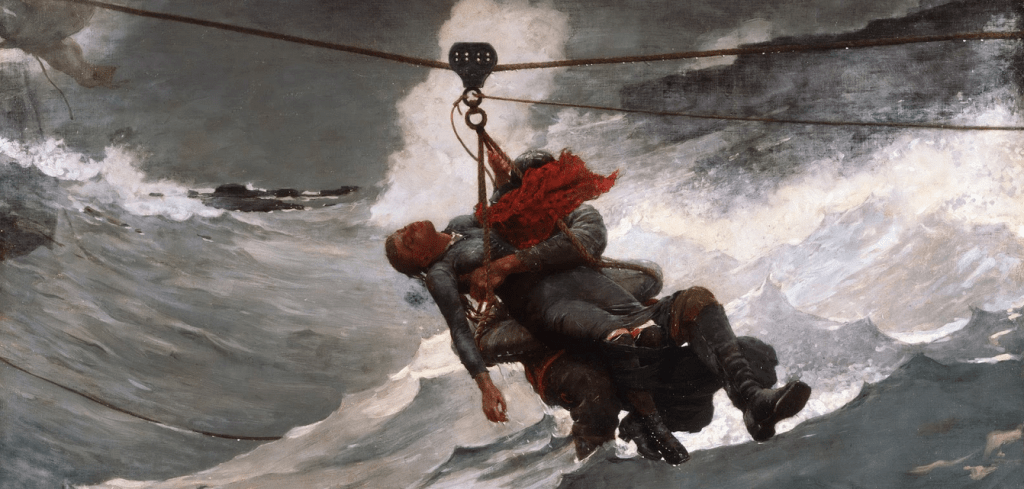
Honor
Everybody knows what ‘honor’ means. But because the word can carry egoistic connotations — ‘glory’, ‘renown’, ‘fame earned’ (from Old French onor), and ‘dignity’, ‘distinction’, ‘position’, ‘victory’, and ‘triumph’ (Modern French honneur) — I thought I’d lay out the definition the way it is meant here.
Here, ‘honor’ means honesty, integrity, or sincerity in one’s beliefs and actions. It denotes a fine sense of, and a strict conformity to, what is considered morally right. All three words, ‘honesty’, ‘sincerity’, and ‘integrity’, refer to high ethical principles and the absence of deceit or fraud — hopefully, no egoism at all.
To wit: ‘honesty’ denotes the presence of probity and, particularly, the absence of deception or fraud. ‘Sincerity’ implies an absence of dissimulation or deceit and a strong adherence to truth. And ‘integrity’ indicates a soundness of ethical principle that no power or influence can alloy or sunder.
Honesty comes from Old French oneste, honeste (‘virtuous, honorable; decent, respectable’), from Latin honestus (‘honorable, respected, regarded with honor’; figuratively, ‘deserving honor, honorable, respectable’), from honos + the suffix –tus.
Sincerity comes from the mid-16th century (also in the sense ‘not falsified, unadulterated’): from Latin sincerus (‘clean, pure’).
Integrity means adherence to moral and ethical principles; soundness of moral character; uprightness.
More to the issue at hand, another definition of integrity is particularly applicable: the state of being whole, entire, or undiminished. It comes from late Middle English, from French intégrité or Latin integritas, from integer (a number that is not a fraction; a whole number), which here means ‘intact’.
In Scientology 1.0.0 terms, integrity begins at 4.0.
8.0 means being entire — as a human. 40.0 means being entirely whole.
About the Code
My father states: ‘No one expects it to be closely and tightly followed. An ethical code cannot be enforced. Any effort to enforce the Code of Honor would bring it into the level of a moral code. It cannot be enforced simply because it is a way of life which can exist as a way of life only as long as it is not enforced. Any other use but self-determined use of the Code would, as any Scientologist could quickly see, produce considerable deterioration in a person. Therefore its use is a luxury use, and which is done solely on self-determined action, providing one sees eye to eye with the Code of Honor.’
To be clear about terms as they’re used here: by ‘ethics’ is meant self-determined ethics; by ‘morals’ is meant group-agreed rules of conduct. Ethics cannot be imposed by force (justice) without leading to deterioration in circumstance, but morals can be insisted upon and consequences for failure can be imposed, because a group has the right to establish rational rules of conduct that promote its survival.
My take
Just a few comments of my own here. Hopefully, they will be understood as purely personal opinion.
The code is presented to the world as it is today: a world that suffers a great deal of outrage regarding the economy and governments – which it would suffer less of if more people lived by such a code, as corrupt economies and governments depend on a confused population to flourish. This provides a clue as to why it is worded the way it is.
The word ‘never’, with its authoritarian tone, resonates with those of us who live life at 3.0 and below but might aspire to a higher level of conduct. At tones above 4.0, however, a dictate such as ‘never’ becomes unnecessary, since it posits something one simply would not do in any case. Such are the degrees of consciousness and understanding at those levels — provided, of course, one is educated about how to live in such bandwidths, which includes learning to think not only with discernment but with concepts, rather than literally (literalism being a bane of mankind). In that sense, the Code of Honor reads as a description of the normal operating basis for individuals existing at 4.0 and higher, worded for those not yet there.
That said, I have a few other comments.
Code point 2, ‘Never withdraw allegiance once granted’: I read this as applying to allegiance that was intelligently granted in the first place — meaning the person or group is observably ethical, does no harm, and remains deserving of that support.
Point 3, ‘Never desert a group to which you owe your support’: likewise, I take ‘owe’ to imply something earned and maintained by the group in question, not a demand for unquestioning fealty (something only an unethical group would do).
I make these remarks about points 2 and 3 because I have heard of and known individuals and groups that assert lofty mission statements who, over time, became quite dishonest and deviated markedly from their original goals; one is not always cooperating with the same person or group one joined originally. Also, sometimes one can inadvertently join an unethical group that demands unquestioning loyalty as a condition of membership, often by means of an oath or contract of some sort, only to realise later their error. In any case, thinking conceptually and with the entire Code tends to resolve questions about who, and what, deserves allegiance.
Point 7, ‘Never permit your affinity to be alloyed’, is a wonderful point: love despite all reasons not to. In my view, affinity is sacred; one should embrace what they love without feeling the need to justify, apologise for, or explain their preferences to anyone. However, affinity does not necessitate granting others access to oneself. It is entirely possible to love someone while maintaining boundaries, refusing cooperation, and imposing strict limits. It can happen that some people overlook the misbehaviour of others because ‘How could they love them if they were terrible people?’ The phrase ‘affinity alloyed’ suggests a lack of true understanding. Blind optimism, often associated with a Pollyanna attitude, can result in misguided empathy and does not equate to genuine comprehension. High levels of ARC correlate with high levels of understanding, and at times, those we love must be firmly prevented from causing harm to others, as indicated in point 12; therefore, they must not serve as a conduit for those with ill intentions.
Point 10, ‘Your integrity to yourself is more important than your body’: this one could include the pursuit of owning MEST for its own sake (property being an extension of one’s body). Many people I have known gave up on their dreams because pursuing them might have led to reduced circumstances or the contempt of their peers; in the West, it is a truism that being poor is the worst shame. As a result, they chose to pursue wealth instead, or at least attempted to do so. Additionally, prioritising the ownership of things or the accumulation of money, rather than realising them as outcomes of ethical behaviour, is quite distasteful.
Personally, given the political climate we live in today, I might add a line:
Never play the victim.
This is already evident in lines 4 and 5, but I’d emphasise the concept further, as many of the most seemingly powerful groups and political movements appear to be stuck in performative grievance and it is proving contagious. Consider the numerous groups currently asserting claims of victimhood as their sole identity. This has even spread to individual identity celebrating victimhood: such as ‘all transexuals are victims of the patriarchy’, or some such. Such strategies are passive-aggressive (1.1) attempts at taking down the whole of society.
Perhaps more importantly, all the resistance and enemies one will have in a life are never the cause of one’s Condition. How one responds is one’s Condition.
Again, I think figuring out how to practise the whole of the Code would probably make it easier to live according to each point of it.
No dwindling spiral
My father goes on to say: ‘If you believed man was worthy enough to be granted by you sufficient stature so as to permit you to exercise gladly the Code of Honor, I can guarantee that you would be a happy person. And if you found an occasional miscreant falling away from the best standards you have developed, you yet did not turn away from the rest of man, and if you discovered yourself betrayed by those you were seeking to defend and yet did not then experience a complete reversal of opinion about all your fellow men, there would be no dwindling spiral for you.’
(‘Spiral’ refers to the Cycle of Action which is, the creation, growth, conservation, decay and death or destruction of energy and matter in space [which produces time]. ‘Dwindling spiral’ means smaller and smaller cycle of action that contain less and less survival, like a plane that falls out of the sky and spins in tighter and tighter revolutions until it hits the ground. The cycles being referenced could be phases in life, a whole lifetime, or even many lifetimes.)
I have to say, that is a fascinating line: ‘If you believed man was worthy enough to be granted by you…’ That’s ‘granted by you’. It reminds me of something.
Granting beingness
In Scientology, certain verbs are transformed into nouns ending in ‘-ness’ to denote specific states or conditions. For example, ‘doing’ becomes ‘doingness’ (the state of engaging in activities), and ‘having’ becomes ‘havingness’ (the condition of possession). This transformation exists because Scientology processes address states to resolve problems regarding such things as personal conduct (ethics). Central to this are beingness, doingness, and havingness — the three main, most basic conditions of existence for every individual. That is to say, to have anything, one must do something, and to do something, one must be (something). For example, to have space (that is, spiritually – see chapter 3), one must create space, and to create space, one must be a creator of space (something which everybody can do, by the way).
‘Beingness’ refers to the state of individual existence and encompasses all forms of identity. The identities of others can sometimes be hard to take, though — such as people you are at variance with, or even in opposition to — so granting beingness means allowing others to be who they are, even if you disagree with them. That’s ‘allowing’, not ‘giving permission’, mind you. Giving permission for another to ‘be’ is a power no one possesses (except megalomaniacs and authoritarians), whereas ‘allowing’ simply means ‘not prevent or forbid’. In other words, ‘letting be’.
In Scientology it’s stated that ‘assuming or granting beingness is probably the highest of human virtues and that it is even more important to be able to permit other people to have beingness than to be able oneself to assume it.’
And there, again: no egoism.
Greatness
While discussing the concept of granting beingness, I thought I might mention that, similar to the relationship between honor and granting beingness, there is also a connexion to the idea of ‘greatness’, a point well known in Scientology.
In March of 1966, my father published a short essay titled What is Greatness? For those familiar with it, he mentions several controversial points. Among them are understanding forgiveness differently, and the belief that man is basically good.
It’s a big debate whether or not man is good – not just whether he is good but also what exactly is meant by ‘good’. Here ‘good’ is defined as desiring survival, which is proven by the fact that man has been mostly successful at it. Surviving, I mean. That definition should settle the argument, but it usually doesn’t.
Currently, the statement ‘man is basically good’ is considered by some arbiters of morality to be laughably naïve: a Pollyannaish take on the basic nature of humankind, indulged in only by fools. From such a perspective, one might conclude that man is fundamentally evil—not good. Going further down that road, the idea that there is any good in the world at all becomes some kind of statistical anomaly. From there, it follows that man must therefore be subdued and compelled to comply with a special definition of ‘good’—typically characterised as ‘obedient’—and to accept the cults of conformity created by his superiors. Apart from missing the fact that there are powers benefitting from this paradigm, which affords the elite the justification needed for total domination and the right to cull or enslave mankind as a matter of policy, such supporters are missing the concept.
Yes, many people do bad things, and some are even capable of great evil, but—and here’s my father’s point—the moment man does harm, he begins to descend into that dwindling spiral. He can even pivot down the road to perdition, having made only a mistake, should he consider it grave enough. One way to interpret that downward spiral is that it reflects conflict with something more pro-survival in his nature: if we were basically bad, we likely wouldn’t experience ‘collapse’; there’d be no differentiation between failing and collapsing, so how could one tell?
My father’s meaning, though, is that the majority of people want to survive which means improving and making life better, and most respond eagerly to help that genuinely assists them to do so.
And that’s good.
Forgiveness
As for forgiveness, my father writes: ‘If there is any saintly quality, it is not to forgive. “Forgiveness” accepts the badness of the act. There is no reason to accept it. Further, one has to label the act as bad to forgive it. “Forgiveness” is a much lower action and is rather censorious.’
The issue here, I believe, is that he isn’t saying one should never forgive. Forgiveness can stop bad things from persisting or escalating. His point is that to forgive an act, one has to label it ‘bad’, and it’s the internal posture that can follow from that — the fixation, the moral intoxication, the stuckness — that he’s advising against.
He continues: ‘True greatness merely refuses to change in the face of bad actions against one — and a truly great person loves his fellow because he understands them.’
People — most of us — get stuck occasionally in the lower bands of consciousness (tone levels) and, while there, either by error or intent, do things that cause harm. Some of us live at these levels and do a lot more damage. Some individuals even dedicate their lives to causing destruction wherever they can. Understanding the reasons behind these phenomena, as Scientology does, leads to a level of comprehension that enables such greatness.
‘True greatness’, he says, ‘merely refuses to change in the face of bad actions against one — and a truly great person loves his fellows because he understands them.’ This understanding is granted by a sufficiently high level of ARC, which allows one to comprehend how and why people can become trapped in the lower tones. Understanding isn’t excusing; it is seeing clearly. It does not require that one make hatred a lifestyle, nor that one carry resentment as a badge of moral righteousness. When another’s misconduct is seen as merely the surface expression of their pain, conditioning, and unconsciousness — sometimes reaching back farther than this life’s memory — the impulse to retaliate against them can lose its glamour.
(Returning to granting beingness for a moment: sometimes it is used in a way that rather means ‘forgiveness’. Someone may dislike another for various reasons, like their ‘bad’ behaviour, but if they ‘grant them beingness’ as a way to forgive them, they are trying to be morally superior to them, which is not the intended meaning.)
Greatness also does not mean allowing egregious harm. Like in point 12 of the Code (‘Never fear to hurt another in a just cause’), it means acting rationally rather than vengefully: doing what is necessary and proportionate to stop imminent harm, set limits, or remove a threat — without the added intoxication of hatred. One can oppose an act, restrain an aggressor, and use force as a last resort, all without spite or, God forbid, the inner project of revenge. The difference is motivational: survival rather than payback.
In addition, if one must forcefully restrain a harmful person, applying this kind of greatness, one can do so with clarity because one understands them — all without consequence to one’s own being. In other words, greatness does not become what it opposes. And if you could combine this level of awareness with the ability to help others alleviate their pain, we would be describing not just greatness but practically something else entirely; perhaps even holiness. Or wholeness: actual integrity.
So, my father suggests that when others come against one, instead of responding with hatred, one should strive to understand them, regardless of their irrationality, hostility, or failures — and recognise the pressures they are under that lead to their desperate actions.
He concludes the essay with: ‘To love is the road to strength. To love in spite of all is the secret of greatness. And may very well be the greatest secret in this universe.’
Happiness
Back to the code: ‘If you believed man was worthy enough to be granted by you sufficient stature so as to permit you to exercise gladly the Code of Honor, I can guarantee that you would be a happy person.’
‘Happiness’, like ‘man is basically good’, is another contentious subject. There is so much confusion around what actually constitutes happiness.
To try and make clear what is meant by happiness here, though, it could be looked at this way: a truly happy person is achieving their survival purposes in life and succeeding in ethical goals.
Such a person is not merely an isolated self when living this way; they are benefitting everyone and everything.
The concept of the Code suggests that what the world truly needs is more individuals who awaken to these higher levels of actual purpose, thus aliveness, consciousness, and integrity, thereby achieving the wholeness of self that is true beingness as the 1st dynamic, which is the prerequisite for actual connexion across all dynamics, the whole point of the mystic adventure.
To this end, it might be that if one wishes to ensure one’s happiness, it appears that the ‘luxury’ of following the Code of Honor may, in fact, be essential.