Potential trouble Sources
Ethics – Part 6
Scientology 1.0.0 – Chapter 39
‘Great wickedness doth prowl the earth, obscure by thee and me; yet peradventure we may unveil the truth, and for ever uncursèd be.’ — Song of the Erstwhile Ostrich.
A disclaimer: these last chapters use the Scientology terms ‘suppressive person’ (SP) and ‘potential trouble source’ (PTS), but there’s no intention to use them as a license for witch hunts, smear campaigns, or any organisational bullying; the terms describe patterns and risk management, not handing anyone a moral blank cheque. ‘SP’ and ‘PTS’ are simply shorthand for two patterns: people who consistently make things worse, and people who are reliably pulled into that orbit.
There are several schools of thought regarding evil; here are two. There’s ‘eliminative materialism’: ‘evil’ is a mistaken moral category; talk of evil should be replaced with psychological, social, or natural explanations. Okay. Then there’s ‘privation theory’: evil is not a substantive thing but the absence or corruption of good. Fine. It’s all very interesting, but such academisms could create a fair bit of fog. The issue is that evil does exist and bad people do actually do bad things.
Then there’s the thought that significantly fewer incidents of nastiness might occur in the world if more of the potentially not-so-evil people chose to stop pretending bad people are simply ‘misunderstood’ or helpless victims of society. Or ceased looking the other way or enrolling in lengthy and complex psychology courses that can obfuscate the entire problem.
Or, even better… if they just stopped helping them out.
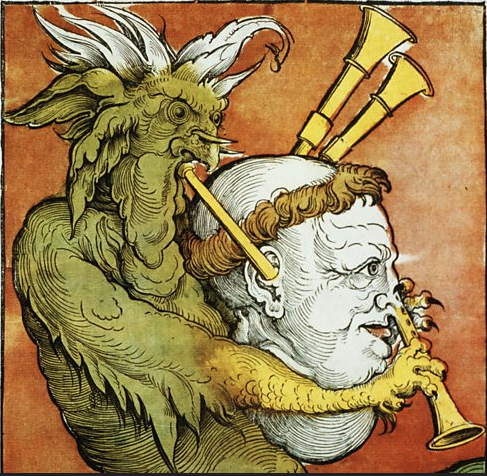
The enablers
An unsettling truth is that, most of the time, whether the bad actor is a larger-than-life monster like Mao or Stalin, a mediocrity like Gates or Soros, or just one of the everyday suppressive persons (SPs) next door, in the office, or at home (or even in your bed), they would have been, or are, rather ineffective without support and cooperation.
As fun and dramatic as some SPs are — Adolf! Charlie! (Manson) — it’s my opinion they are actually a lower order problem. The more senior problem in the world is not so much the SPs, but rather the larger number of people they rely on for their success in causing mayhem. These supporting actors, while less insane than SPs, are still not sane enough to refuse aid — or, much more often, to stand up to them instead of ‘going along to get along’. Without such accessories, SPs would have a harder time operating and certainly could not create suppressive organisations or cults.
Even when you account for error — something often unavoidable in a world where there are always so many variables — it’s quite possible that a lot more would go right in any man-built system if most, of not all, involved possessed goodwill and were honest, no matter how many SPs there are. Much suspicion should arise, then, that the continual and persistent chaos and nonsense in our world is, in fact, not just originated by evil people but supported and perpetuated by cooperative others, without whom many attempts at causing havoc could quite likely be stillborn.
Potential trouble sources
As the individual descends the Tone Scale, they become less and less sane, and more and more a source of disorder — and a potential supporter of the SPs who could not easily orchestrate man-made chaos without them.
The ‘potential trouble source’ (PTS) is an individual ‘under the influence’ of an SP, or SPs, in the present or the past. I’ll get to why they are called ‘potential’ trouble rather than just plain ‘trouble’ in a minute.
Any current association a PTS has with an SP will always lead to problems. Additionally, the time the PTS spent under the influence of an antisocial personality in the past can also affect them today, even if the SP is no longer present.
The connection between the PTS and the SP is that the PTS has committed a transgression that allows the SP to maintain significant influence over them. Often, the sin committed by the PTS resembles the habitual crimes of the SP, but it is usually less serious and may even have been perpetrated only once, or been a simple mistake. Because the PTS has a conscience and the SP (for all appearances) doesn’t, it’s a fairly easy matter for the SP to hold this thing (crime, error, misdemeanour) over the PTS’s head — ‘influence’ is maintained via leveraged guilt. This is not blackmail (although it could be); it is something more insidious.
This mechanism is psychological and should be differentiated from the cooperation that an SP can elicit through physical threats. A person compelled to obey an SP does not automatically qualify as a PTS. The non-PTS individual, who is not as easily intimidated, is likely to strike or retaliate as soon as the SP is off guard. In contrast, the PTS individual will comply, even without any immediate threat. Their personality profiles are sufficiently aligned with the SP’s to permit association, which includes a failure to recognise their own reflections in a mirror. Similar to the SP who firmly believes they are not suppressive, the PTS is often completely oblivious to the fact that the SP is one—or that they themselves are a PTS.
Speaking of mirrors, the vampire myths are all about this dynamic. There is even something like the psychosexual thrill involved: quite often the PTS is in the band below 1.1, whereas the SP might be at 1.1 or the band directly above. This relationship can produce a dark, seductive dynamic similar to the ones depicted in vampire lore. As fearsome as vampires are with their supernatural powers, the main point here is that there can be no effective Draculas without Renfields. Often a number of them.
Thus, the PTS is an enabler. Without PTSs, SPs cannot function effectively. Like oil in an engine: without it, the car won’t run.
PTSs are symbionts (but they might be forgiven; they are ‘just following orders’, after all).
Why ‘potential’?
Unlike the SP, when you help the PTS, they appear to get better. Like normal people, the PTS responds to effective and genuine assistance, at least at first — but it doesn’t ‘stick’. That is: any benefit to the PTS person is only temporary. Others who are helped in the same way seem to stay helped, but not the potential trouble source.
Everyone knows people like these. They come to you with their problems, you help them, they brighten up and seem to feel better. But the next time you see them … they have exactly the same problems. Time and time again through the years, they never really get better, and usually get worse. The term for this in Scientology is ‘rollercoastering’.
But why are they called potential sources of trouble in Scientology? So they rollercoaster; so what?
Because some of your troubled friends will resent your help. Eventually, they may even attack you or cut you out of their lives, treating you as if you were the source of all their problems. Oh well — life, right? Still, it’s not as if they caused you any real trouble; they just mysteriously blew up and then ‘ghosted’ you and went their separate ways. But if you’re a professional therapist — such as a freelance Scientology auditor, they can be a lot of trouble.
What can happen is that the PTS is paying you to get better, and when they don’t, they become upset. Possibly they will demand all their money back months, or even years, after engaging your services — money you have most likely already spent. Such situations exemplify the ’trouble’ indicated by the term ‘potential trouble source’. In addition to the countless costly emergencies and the repeated attempts to pick the PTS person off the floor, this often leaves the auditor financially strained and with insufficient time to assist others who can be more readily helped.
Or, much more seriously, the PTS might claim that not only have you failed to help them, you’ve injured them. They might demand not only their money back, but damages, too. And if they don’t get paid, they might just hire a lawyer and take you to court.
That is what is meant in Scientology by ‘potential’. If you don’t help them, they may see you as having betrayed them and direct their frustration and anger at you, even if they were improving. Actually, especially if they were improving, it’s the backsliding they’ll hold against you. If that situation occurs, it can lead to significant trouble. With a capital ‘T’.
Just a note: the experience of improving and then deteriorating repeatedly can be far more uncomfortable — even painful — than simply staying in a bad way, slowly deteriorating over time. The contrast intensifies the distress by highlighting the difference. This is why Church auditors are thoroughly trained on SPs and PTSs: not just to avoid trouble but to know how to actually help such a client.
Anyway, this trouble can particularly occur when the therapy is designed to get to the bottom of the only real difficulty everybody has: themselves. There is often only one actual enemy in the room, after all. It’s a tough pill to swallow for some people, particularly the PTS personality, who is usually obsessed with external causes. The average PTS (and SP, for that matter) points fingers so much that it’s a miracle they don’t all have carpal tunnel syndrome. This phenomenon is especially common in a society that celebrates victimhood as much as ours does today.
Trouble 101
Besides the rollercoaster, here are a few things to look out for:
- Compulsive help: the PTS often looks like they’re just ‘helping’ the SP, but it’s taken past the point where a normal person would realise they need to stop helping.
- Cowardice: the enabler’s psychology is mundane — fear of conflict, guilt, and the tranquillising thought that ‘it’s not my place to interfere’.
- Equivocation: they lean on cognitive distortions — minimising, rationalising, and selectively forgetting — because the truth would demand action.
- Misplaced ‘empathy’: they tell themselves they are being compassionate, or practical when they are really buying temporary peace. ‘Empathy’ is a common calling card. But it’s usually suicidal (0.9: Sympathy or lower), because it’s reserved only for other PTSs or SPs, or as an attempt to take down people in higher tones. (True empathy begins at 4.0.)
- Facilitation: mechanically, PTSs supply what the psychopath often lacks — legitimacy, access, and impunity. In families and friendships, such behaviour can mean making excuses, cleaning up messes, supplying money, or ‘just this once’ rescues that quietly become a lifestyle. In workplaces and institutions, it can mean covering poor performance or inappropriate behaviour, running interference, and translating valid complaints into harmless ‘miscommunications’.
- Covering up: in audiences and fanbases, in cults and politics, it becomes reputation laundering — defending the indefensible as ‘context’, treating criticism as cruel, and mistaking charisma for character.
- ‘Camouflaging holes’: similar to ‘covering up’, a term meaning compensating for institutional failure, such as paying out of pocket for things that the institution should pay for, or doing extra work to mask executive malfunction.
Then there are the 12 attributes listed in the previous chapter, the difference being the degree of intentionality and malevolence. The PTS is much like the SP in many respects, which is why PTSs can sometimes flip into being SPs… eventually. Do enough of the SPs’ bidding, and why not just become one? A conscience only ever gets in the way, anyhow.
The PTS has a trajectory: perhaps in the beginning they’re ‘righteous’ in their need to alleviate some problem. Because of this role they quite possibly and eventually make mistakes and gradually become consequence managers, and then they’re vulnerable. Once the PTS is ‘captured’ by the SP, their role deepens over time: after they have justified enough harm, the next step involves protecting that justification, followed by becoming a de facto accomplice, and potentially even a harmer in their own right. That’s how morally compromised people can slide — without meaning to — into being the soft infrastructure that allows remorseless people to move through society like a fire through dry brush.
PTS demographics
In the previous chapter, I estimated the number of SPs in the world at around 1.6 billion. Regarding their support troops—all the Renfields—I could not find any reliable statistics. However, the good news is that there is a growing body of metrics regarding the PTS, although they are classified under different labels. I think each SP may have at least one accomplice, but there may be more enablers than actual bad actors. So, just for the sake of argument, let’s say there are an additional 1.6 billion enablers out there. Added to the number of SPs, that would total around 3.2 billion troublemakers in all. That’s about two in five people on Earth.
Two-fifths is still the minority. But due to the contagion effect among people stuck below 3.1 on the Tone Scale, such attitudes can infect whole populations, as we saw with the COVID lockdowns; they set the tone, others echo it, and it spreads to a substantial percentage of society, leading to mass hysteria.
This matters, because such emotional dysregulation at such scale leads to SPs gaining ground and an inevitable increase in PTSs. Just like the connection between dark damp and black mould, as the environment favours insanity, so insane behaviours increase.
Diagnosis
So what causes the PTS person to fail to improve? After years of dealing with such baffling behaviour, my father discovered the mechanism described above; that there was always someone who had some sort of hold over them. And when this person saw that their puppet was getting better, they would start putting them back in their place. ‘This Scientology thing, it’s not doing you any good; you’re wasting your money!’ And they are right! They are wasting their money — and the auditor’s time.
The PTS always has an SP who makes sure they are put back under control whenever the SP observes the PTS is getting better and is, consequently, escaping their web. Even the ghost of a past SP might still have a powerful influence over the PTS in the present, where they sit in the PTS’s head and countermands all efforts at getting better: ‘You know what you did! You know who you really are! You don’t deserve to get better!’
Again, the ethics of the potential PTS are always shabby. Eventually, they get caught committing some kind of transgression by the SP — again, usually something similar to the criminal acts committed by the SP (or suppressive organisation), and voilà: you have your PTS.
For example, if a man files his taxes and lists too many non-deductible expenses as deductible, such as ‘gifts’ and ‘business lunches’ (wink wink), it eventually raises a red flag. An IRS agent, who is himself at least a PTS, accuses him of ‘stealing from the government’ (most governments being thieves on a grand scale). This fellow, now a ‘criminal’, can be easily manipulated.
There are many methods the SP might use to crush the hopes and dreams of anyone, but in the case of the PTS, the key point here is that they will increase the pressure as soon as the PTS begins to show signs of slipping their bonds, such as can happen when engaging with an effective therapy. This, in turn, amplifies stress. The result is predictable: as soon as the PTS tries to regain control of the situation, they lose it. The increased stress can cause the immune system to break down; attention wavers; sickness and accidents follow. ‘I paid you to help me, and since we started these “sessions”, I’ve experienced three fender-benders, my husband has left me, I’ve broken my ankle, and now I’m suffering from these terrible headaches! I want my money back, and then I’m going to sue you!’
Everyone occasionally has a mishap, suffers bad luck, makes mistakes, or gets ill; it is the pervasiveness and frequency of the PTS’s misfortunes, misadventures, and relapses that one should look out for.
DePTSing
The PTS must, to even the slightest degree, be dishonest before any trap closes on them. In Scientology, it is said, ‘Clean hands make a happy life.’ Translated, the phrase does not mean ‘be ethical and nothing bad will ever happen to you’; it means it is far easier to resolve any trouble or difficulty if one is straight and honest. It also implies that you are not easy pickings for any anti-social character that may come your way. Although the PTS shares many characteristics with the SP, they still possess a conscience, which is the hook. This also explains why they are more problematic than the SP: if a problem is defined as ‘a matter or situation that can be faced and overcome’, then the PTS can be helped with the right tools. Permanently.
‘DePTSing’ is a matter of the PTS identifying the influencer (SP or SPs), as well as taking responsibility for whatever thing or things the PTS has done, or is doing, that give the SP dominance over them. There are a number of ways to run this procedure which needn’t be covered here but are well described in Scientology 1.0.0. Then, finding out what caused their wishy-washy ethics in the first place is essential for a complete solution — which will be discussed in a later chapter.
Addressing personal responsibility often unlocks the way to resolving many of the challenges individuals face in getting better. Regaining control over one’s life by examining personal causation wherever it genuinely applies and clarifying where it doesn’t — being accurate about who or what did what and who or what didn’t — can significantly assist just about anyone, really. As for the PTS, addressing their agency in their relationship with an SP or suppressive organisation, is the only way to reclaim their life.
Management
Due to reasons that I will explain later, our world will continue to have SPs, they’re a fact of life at this time. Only the uneducated (as well as the SPs and the PTSs) insist on envisioning a world without any suppression, which, quite naturally, would require suppressing all individuals who do not cooperate, including you and me. (SPs just love utopias as a reason to knock it all down.) It’s a hard fact that they are simply part of the game, at least for now. Hence, the only solution is to become aware of the phenomenon and manage it accordingly. What we could have rather quickly of is a whole lot less PTSness.
This is done by spotting SPs where possible. If manageable, avoid them, but if not possible — given how common they are (one in five) and the fact that there’s quite possibly one or two in every family — try to keep your hands clean around them (and keep a good attorney on retainer). Despite the inevitability of making mistakes outside your nature when around them, maintaining a straight and honest demeanour remains the most reliable prophylactic measure, albeit risky.
As for PTSs, just be aware. Recognise the rollercoaster phenomenon and take care. Unless you have the determination and technology to resolve their state thoroughly (spotting the SP past or present, recognising the hook or hooks that put the PTS under the influence, as well as a full program to help them get honest and straight), about all you can do is understand the condition and manage the relationship accordingly (and keep a good attorney on retainer).
In terms of how to communicate with either the SP or PTS, don’t give them information they can use against you. In Scientology there is the thing called ‘good roads and fair weather’. What it means is: don’t get into significant or heavy communications, particularly not sharing your troubles, and especially not those details of your life you can be hanged with, if you know what I mean. Just keep it light, no matter how much an SP or a PTS invites you to ‘open up’. Even with clean hands, there’s always something — those uncharacteristic mistakes you keep making around certain people, for instance, you know?
There’s also something called ‘disconnection’ (known as ‘no contact’ or ‘boundary-setting’ in other practices), possibly one of the most controversial methods of handling the SP. I will go into more detail about that later, but right now let me just say that disconnection does not just mean packing up, moving out, and blocking contacts — although there is that. It means spotting not only the SP or PTS, but also understanding who they are and why. (How SPs might get the way they do will also be covered later.)
Better education and greater understanding are always the best ways out of any situation with the SP or PTS, even if you have great love for, or loyalty to them. Furthermore, understanding does not mean you have to stop having affinity for the afflicted SP or PTS if they’re an old friend or loved one. But it does mean you must deal with, and relate to, them differently if you wish to remain unscathed.
Should the reader be interested, there are further notes on the subjects of SPs and PTSs. If you look on this site’s menu, you can find them as ‘Notes on SPs and PTSs — addendum’, or just click here.


12 responses to “The Enablers”
You’ve made a complex and scary subject easy to understand, and much easier to relate to everyday life.
This is great to see and to refer others to. Much appreciated.
LikeLike
Thank you.
LikeLike
This came at the right time. I needed this now .
Ml, Shaily
LikeLike
Thank you for letting me know. I’m glad it is useful.
LikeLike
I also feel the numbers of SPs and PTS are currently higher than the 2% and 20% respectively, as indicated by LRH.
I’ve been PTS to my parents all of my life. Of course, I was unaware of this until much later in my life. (62 yo, during Covid.. woohoo!…double the fun)
They were Olympic “Third Party” Participants, till the day they died. I’ve had a number of “friends” in both the “Cool Kids” Scientology group and “Bad Kids” Indie Scientology group, who 3rd Partied me. I am/was PTS to them too. Darn it, I can’t see who they are, until well after they’ve done their damage. Is that because PTSs are “worse than SPs, because they’re out ethics?”
Wow, I feel 3rd partied now somehow.
I looked for what you have to say about Third Party Law and found nothing. Will you be ruminating and commenting on that at all?
Thank you,
Diana Rhyne
LikeLike
I know what you mean; you can make some astounding discoveries, even later in life.
Yes, I will be covering the third-party law eventually. These chapters are establishing a foundation for future discussions on that topic, as well as on authoritarianism, Group Dianetics, black PR, and related subjects.
LikeLike
I just put up some more stuff about SPs and such (link: https://arthurconwayhubbard.com/notes-on-sps-and-ptss/), if you’re interested. Third Party Law will be coming up eventually, after Black PR and some other topics.
LikeLike
Thanks again for your attention to pertinent subjects!
I enjoy your perspective quite a lot.
LikeLike
Breadth of TIME is the key to this whole subject. How wide or narrow a scope of time are we encompassing. Todays heroes become tomorrow villains. Babys become heroes.
For a while I was so disillusioned with the witch-hunty style of life that I discarded the whole approach in favor of the song “There ain’t no good guy. There ain’t no bad buy. There’s only you and me, and we just disagree.” That resonated as a higher truth after I’d been sold so many good and bad guys and watched them switch around without commentary by those who’d sold me.
We look at a stat graph based on our level of management: How much of an executive we are in dealing with it: hourly, daily, monthly, quarterly, yearly, decades, generations; the question is what game are we playing?
The identification and disarming of evil and of the enablers provides sanity and clarity particularly on a small time scale. We’re trying to pull the cart from A to B. Who will help us?
My friend Martin has a great illustration of it:
This is simple and easy because we have a simple, clear defined workload and objective. Our view zooms out as we look at some larger workload over a longer scope of time; when we recognize that the cart pullers are being born, growing old, and dying. With a large enough scope of time, we need a model that encompasses our treatment of the elderly.
On a small scale, with bright purpose, small scope of view we can act with intensity and dazzle and amaze with the savageness of our action. Develop a Spartan group by choosing those who align with our path. But observe that Sparta didn’t make much contribution to the world in terms of philosophy or define our civilization the way Athens did. Athens with its slow cumbersome chaotic democracy couldn’t develop the streamlined military of Sparta which is achieved by such savage discipline. Survival and defeating enemies, pride, solidarity are key for that big smash, but it doesn’t last like the broader level thought.
In the world of business, commerce, and survival of companies and nations we can have an impressive Machiavellian meritocracy rise up and dazzle us all briefly, but the groups with a broader view of time will survive longer and wider and create more of an effect on the world.
I guess we all have to grow up to the confront of evil and we will have to identify it, deal with it and wake up the enablers. Maybe we need to wake up to the brutal nature of the world and when we do so we’re actually helping the enablers by getting them to a higher level of courage. Caring enough about someone to face the unpleasant or unsocial job of insisting they awaken from their slumber and throw off their energy vampires.
But this operation goes both ways! When we ask ourselves “who’s stopping me?” “Who’s holding me back?” and we recognize that our fate depends on rising up to the courage level of dealing with such toxic insidious stoppers to rise to some greater destiny we have a bit of truth.
Equally, we need to survey the landscape for the bright stars—based on the same premise! There are those who we can associate with or seek to interact with more who will have a positive transforming effect on our lives! In the same way that the suppressive drags us towards death and unconsciousness, genuinely loving and courageous people will bring us up.
When we survey where we are and where we want to go we need to put an equal amount of interest in this side!
LikeLike
Thank you for this. I think you’ll like the next chapter and an addendum, which I’ll link to when it’s ready.
LikeLike
And thank you for the link, it certainly makes the point.
LikeLike
Here’s that link I promised: https://arthurconwayhubbard.com/notes-on-sps-and-ptss/
LikeLike