Suppressive People
Ethics – Part 5
Scientology 1.0.0 – Chapter 38
The following chapters use the Scientology terms ‘suppressive person’ (SP) and ‘potential trouble source’ (PTS). However, there is no intention to use these terms as justification for witch-hunts, smear campaigns, or any other form of organisational bullying. These terms are meant to describe patterns and assist in risk management rather than provide anyone with a moral blank check. ‘SP’ and ‘PTS’ act as shorthand for two distinct patterns: ‘SP’ refers to individuals who consistently cause harm, while ‘PTS’ describes those who are reliably drawn into their orbit. You are free to refer to these patterns in any way you prefer.
Before moving on to discuss useful programmes for improved thinking, I want to cover one other topic: evil.
Evil, in my opinion, is a thoroughly under-discussed and overlooked subject, possibly because it can be extremely upsetting for many: realising that there might actually be bad people roaming the world’s dark alleys — and then trying to identify who they might be — is a supercharged issue.
In Scientology 1.0.0, the information regarding psychopaths — who they are and what to do about them — is quite comprehensive. The following is the briefest sketch of what one might learn there. Of course, I urge any reader interested to see for themselves what they can find out about the subject using the original source.
Evil?
There is a vast amount of material on the subject in many other fields as well, accumulated over millennia. The Old and New Testaments are absolutely chock-a-block with wisdom concerning righteousness and evil. But, alas, it’s not ‘scientific’, so it don’t sit well for us sophisticated, modern types.
Since the end of WWII, however, the study of evil has intensified, for reasons one can understand if you know anything about the Holocaust.
Quite a lot of useful information, certainly as regards measurement and classification — if not reason or motivation — has been collected since then and is available to the general public, but only if you make it your business to hunt for it. Rather than being a topic at the forefront of what our cultural gatekeepers push — as I personally think it should be, right up there with sports and reality TV — you have to go out of your way to find out about it. Studies on evil are not on the front shelves next to the Harlequin novels and Oprah’s best picks.
General ignorance about evil — or, more probably, unwillingness to know — can hamper any intelligent discussion of the subject as the very real social problem that it is. But it is; very decidedly so.
Properly study almost any socio-political or economic catastrophe; work your way up the chain of command; and voilà: there’s your suppressive person (or persons). Do this, though, and you will probably get yourself written off as a ‘conspiracy theorist’; after all, every sensible person knows that ‘all the terrible things in the world that happen are just things no one saw coming’ (2008 financial crisis: ‘Whoopsie!’; Wuhan laboratory: ‘D’oh!’).
You see, there are advocates of the idea that evil, as such, doesn’t truly exist in empirical terms: that the mountain of terrible things that happen in the world is mostly unintentional and certainly unpredictable — often matters of pure chance. But this sort of line seems a bit, well… convenient; perhaps something concocted by those who would rather direct attention away from themselves.
During the 1960s and 1970s, this idea — that the evil extant in the world is mostly random — began to be promoted by mainstream academics. No surprise there: people were becoming increasingly distrustful and sceptical of authority; obviously, something had to be done about it.
What with the whitewash on the JFK assassination and a puzzling ‘police action’ in South-East Asia, it’s quite possible that ‘historical determinism’ needed to be nullified and replaced with a more haplessly vague narrative. Naturally, this has resulted in giving too many antisocial personalities not only a pass but, in many cases, elevated positions of power, now that nothing is really anybody’s fault (‘failing upward’).
This approach, in turn, has allowed vast numbers of regular, everyday people to become resigned to the ‘Oh, well. What’s one to do’ theory of history, so much so that societal malaise has set in and, if not reversed, could result in our thorough enslavement by people at the top of the evil-doer food chain — people one would never want to meet in a brightly lit room, let alone some dark alley.
Evil 101
Insanity, in Scientology, is not just someone raving and shrieking in a straitjacket and bouncing off padded walls (although there is that). Insanity is the failure to support people of goodwill and activities that favour general well-being and survival. All tones below 2.0 are degrees of insanity (with each tone having its own scale of intensity).
Insanity is bad, sure, and does no one good, but there are levels of insanity that are very grave indeed. High-intensity insanity is the persistent suppression of survival vectors as a matter of routine, which one could therefore label, albeit somewhat colloquially, ‘evil’.
The definition of ‘evil’ essentially refers to actions that are profoundly immoral and wicked. An evil person would be anyone who actively, intentionally, and continuously undermines the survival of their friends, family, societies, or any other dynamic upon which the rest of us rely. They might use overtly active (1.2 to 1.9), covertly active (1.1), or ‘passive-aggressive’ means (0.01 to 1.0) to achieve this.
Being evil involves more than just being less than sane, like those stuck below 2.0, being mean, or occasionally making mistakes; it specifically refers to engaging in habitual, malicious behaviours aimed at causing unwarranted destruction (unwarranted from a sane perspective, that is).
Here are a few of the commonly used terms in the psychopathy research I mentioned earlier:
Antisocial personality disorder (ASPD) is defined by a chronic pattern of behaviour that disregards the rights and well-being of others.
Cluster B personality disorders (or, more loosely, ‘Cluster B traits’) are marked by intense, impulsive, and often self-sabotaging emotional behaviours, leading to interactions with others that can be perplexing. Individuals may employ these behaviours to manipulate those around them while simultaneously coercing them to participate in their destructive actions, which can lead to a cycle of dependency and emotional turmoil for everyone involved.
The ‘dark triad’ is a psychological theory of personality that describes three malevolent personality types: Machiavellianism, narcissism, and psychopathy. Only recently has this term gained popularity, but I believe it primarily falls under the ‘psychopathic personality’ category.
Psychopathic personality combines a lack of empathy and remorse with confident, uninhibited, and self-centred (narcissistic) characteristics. Individuals with this personality type often exhibit a disregard for the feelings of others and tend to prioritise their desires and needs above all else. Surface charm and immunity to stress often mask these traits, creating an outward appearance of apparent normalcy, or even ‘charisma’.
That’s some jargon, to be sure. Some people complain that Scientology has too many special words. In Scientology, however, all these categories fall under a single appellation: ‘suppressive person’.
Or ‘SP’ for short.
Attributes
Many individuals and groups become extinct as often as they do because they cannot properly differentiate good from evil.
To help solve this problem, my father described twelve attributes to watch for in a document dated September 27, 1966. Here I have paraphrased each one in italics, some followed by a comment or two.
1. The antisocial personality speaks in broad generalities and avoids providing specifics. To them, all of society appears as a large hostile generality that’s against the antisocial person in particular.
Another aspect of this is the tired old ‘us versus them’ paradigm SPs love so much, with ‘them’ always referring to some broad, poorly defined entity: ‘left’, ‘right’, etc. Watch out for persons or groups that spend a lot of energy playing the victim of a ‘them’, even using ‘them’ as the main definition of what they supposedly are not (negative definition).
The antisocial personality can get downright specific, though — but only when specifics are irrelevant, or even a distraction from the actual issue. They substitute inapplicable precision for relevant understanding, and the discussion might never get back on track: ‘Vaccines can be risky.’ ‘Polio was eradicated with a vaccine!’
2. The antisocial person deals mainly in bad news and critical or hostile remarks. No good news or complimentary remarks get passed along.
Watch out for this from your favourite mainstream talking head, expert, politician, ‘pundit’, or official when they primarily offer ad hominem attacks and slander, especially of anyone offering actual solutions to real problems or speaking in specifics.
3. The antisocial personality alters communications in order to worsen them when acting as a relay of messages or news. Such a person also pretends to pass along ‘bad news’ which is, in actual fact, invented.
On the receiving end, people stuck below 2.0 often easily buy into ‘bad news lies’ because of their readiness to believe catastrophic narratives: ‘Climate change! The world is ending!’ Such inventions are a great way to get people to accept arbitrary policies, enforced at any cost. ‘The ends justify the means’ is a tactic used by SPs for millennia, and the means are always initiated on an emergency basis: ‘We must take action now!’
4. One of the sad things about an antisocial personality is that he or she does not respond to treatment or reform or psychotherapy.
5. Surrounding such a personality are cowed or ill associates or friends who, when not driven actually insane, are yet behaving in a crippled manner in life: failing, not succeeding.
Affect is one method used to spot SPs: observe those around them. Are these people’s lives chaotic? Are they often sick? Is there a lot of drama — accidents, bizarre bad luck? This phenomenon is typical of most cults. Members are often driven by false predictions: ‘The end of the world is nigh!’ They have no time for family or friends; they are exhausted, hostile to alternative views, emotionally dysregulated.
Observing such groups, particularly those made up of ideological ‘activists’, reveals that many are chronically ill and frequently claim mental disorders, sometimes even asserting that such symptoms are proof of their virtue: ‘I’m exhausted and ill because I care about the world; you’re all rested and healthy because people like me have to do all the work you should be doing.’ Meanwhile, SPs are cool cucumbers, not suffering from all the pandemonium and turmoil they are surrounded by — although they might erupt in fury at the stupidity and incompetence of their followers.
6. The antisocial personality habitually selects the wrong target. If A is the obvious cause, the antisocial personality inevitably blames B, or C, or D.
After 9/11: invade Iraq; after COVID-19: blame bats; after 2008: blame… nobody?
The only proven solutions to most human problems have been prosperity through production and innovation, yet it seems SPs can only solve problems by censoring, mandating, taxing, policing, or doxing the daylights out of others, often without due process, proof, or logic (the Orwellian-named ‘USA FREEDOM Reauthorization Act of 2020’ comes to mind).
It seems to me that too many people, including police, try to figure out the motives of SPs, attributing to them reasonable ones such as riches, power, fame, sex, and so on. Trying to ‘make sense’ of their behaviour can overlook the obvious: destroying people and things can be extremely pleasurable and satisfying.
7. The antisocial cannot finish what was started. Such people become surrounded with incomplete projects.
8. Many antisocial persons will freely confess to the most alarming crimes when forced to do so, but will have no faintest sense of responsibility for them; things ‘just happened’.
Too little, or, more likely, no conscience.
9. The antisocial personality supports only destructive groups and rages against, and attacks, any constructive or betterment group.
It’s not too difficult to find certain individuals endorsing the worst programmes. For example, ‘gender-affirming care’ for minors comes to mind (which appears to be an attempt to eliminate homosexuality or reproduction), possibly representing the most recent iteration of the late nineteenth-century ‘genetic purity’ policies formulated by the Carnegie and Rockefeller networks, which later gained massive state support in mid-twentieth-century Germany.
10. This type of personality approves only of destructive actions and fights against constructive or helpful actions or activities.
‘What is constructive or destructive, anyway? Who’s to say?’ This is moral relativism. Or take social constructivism as an instance; it is heavily pushed by academics in places like Harvard University and Oxford University. What is it, you might ask? It is an aspect of postmodernism: the idea that 2+2=… well, anything you like, really — because all of reality is just ‘a construct’, just ‘made up’ to become each person’s ‘personal truth’. Great ways to obscure what would otherwise be a clear moral pathway.
11. Helping others is an activity that drives the antisocial personality nearly berserk. Activities, however, that destroy in the name of help are closely supported.
There are so many examples of these last three traits in our world today that it is almost unnecessary to go into them further. One of the advantages of social media is that antisocial behaviour is on full public display, with panoramic sound and in full technicolour. Observe any pundits on TV who scream over one another when confronted by reasonable guests — or who scream over one another just because.
Furthermore, Trump has been quite useful; disagree with whichever president you like, but talk about a litmus test: TDS (Trump Derangement Syndrome) is a surefire way of identifying people below 1.2, the band of the Tone Scale where so many SPs operate.
12. The antisocial personality has a bad sense of property and conceives that
the very idea of ownership is a pretence, made up to fool people. Nothing is ever really owned.
Socialism in a nutshell.
I might add five more:
Wilful distortion of language. An antisocial individual may insist on altering definitions and employing vague terms, making normal communication increasingly difficult or even impossible. For example, using ’they/them’ pronouns creates confusion.
The loudest, most strident and persistent accusations of who is truly ‘evil’ often come from the very individuals or groups that ought to be examined most closely. This is called ‘projection’ in psychoanalytic circles.
The antisocial personality will never accept an apology or an attempt to make amends, instead choosing to hold any perceived transgression against you indefinitely. If you give them an inch, they will ‘own you’. This behaviour is commonly observed on social media, where anyone accused of political incorrectness who tries to explain or express regret is shamed by the mob.
Persistent support for the ‘underdog’ when such are in fact criminals.
Also, the antisocial personality is not inclined to think in terms of productivity or creation. Redistribution, bonds, taxation, fines, and rent-seeking are the go-tos when solving any problem where resources are claimed to be needed. This puts almost every bureaucrat and politician into question, especially the ones who think the government can ‘create’ jobs (besides enlarging their own bureaucracies, that is).
And if they do make or build anything, it might look like this:

Or this:
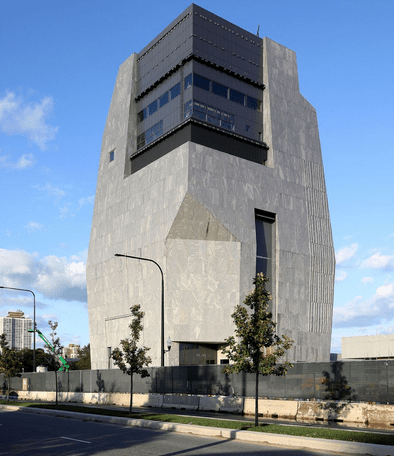
Everyone will show some of these traits at times, but if someone shows six or more all the time, there’s your SP.
SP demographics
To put things in perspective, here are some statistics.
By some estimates, 15 to 20% of people in the world exhibit ASPD (my father’s estimate in the 1960s was 20%). So, let’s say that about one in every five of us is a person who is hostile to the overall well-being of others. That means individuals like these are born into the world about once every 1.1 seconds; 3,202 are born every hour; 76,852 per day; and 28,051,117 per year. That would be about 1.6 billion or so scattered around the world as we speak. That’s about one-fifth of the global population.
But because of such instruments as mainstream and social media, it can feel like the majority, which makes some sour on humanity (‘Hell is other people’). For example, some analyses (using IP addresses as a rough proxy for unique users) estimate that only about 16–18% of social media users are pushing for some kind of hard-core tear-down of society. This minority can nonetheless appear to ‘balloon’ through those users opening multiple accounts under different names, the creation of sock puppets, and tools like bots. In other words, a relatively small number of people can generate a much larger fraction of accounts — and an even larger fraction of the visible activity (SPs can have a lot of time on their hands). Information technology then amplifies their overall effect, making it appear as though many more people are adherents of these ideologies than actually are. Due to the contagion effect among people stuck below 3.1 on the Tone Scale, such attitudes can infect whole audiences; they set the tone, others echo it, and it spreads to a substantial percentage of the population, leading to a distorted perception of the prevalence of SPs.
Possibly more alarming, another set of studies estimates psychopaths — extreme ASPD — as being between 2% and 3% of the world population. Many psychopathy researchers converge around this range, with some estimates running up to 4% (my father had it at 2.5% in the late ’60s).
The percentage sounds small until you translate it into headcount. Two to three per cent of the current world population is on the order of 160 to 250 million people. Call it: north of 200 million.
And they do not arrive in neat batches once a decade; they arrive with everyone else, ‘sifted in’ so to speak. If we assume roughly 140 million births globally per year, then 2% to 3% of that is about 2.8 to 4.2 million births per year — roughly one every eight to eleven seconds.
That is not to say all of them will become powerful, or even functional. Many will not; probably most won’t. But even a small percentage, applied to billions, is not a small number. Imagine what a fraction of that could get up to if they clustered in government, big business, or high finance. Thank goodness that never happens.
Self-awareness
No SP thinks they are one. Often they look in the mirror and see a hero looking back. Their sacrifices are for the good of others. If you were to ask them about their actions, they would have them so thoroughly justified that you can’t get a ‘read’ on them as you would with a normal person. They can easily pass a so-called ‘lie detector’ test. If you asked them if they were worried they were an SP, they might even say ‘yes’ — not because they are worried, but because they know it’s taken as evidence of conscience.
If anyone actually does worry about being an SP, it’s a pretty excellent sign that they aren’t one.
Tone levels
All SPs are below 2.0 on the Tone Scale, but relatively few people below 2.0 are SPs. Yet.
The difference is intention. Most people below 2.0 are not malevolent, per se. Yes, these individuals act in ways that disrupt the dynamics, but they often feel conflicted about their behaviour, so when given the chance to change, they may choose to do so. SPs will seem to want to change too, but here is the difference: when receiving help, the person below 2.0 will respond favourably and will change. The SP will not change.
Now, ask yourself: do you know anybody like this? Is there, or has there ever been, anyone in your life who reliably triggered a visceral, unbidden survival reaction in you — someone you felt you had to get away from entirely? That reaction can be a clue that something is very wrong in the dynamic, and worth examining.
Conclusion
This might seem like a lot of bad news. But it seems to me that the subject of evil people should be one of the top priorities in understanding human dynamics as well as history. Wouldn’t it be a good idea if it were better known and thus open to wider discussion? But of course it is not; it is too upsetting.
Perhaps one day our society will realise that SPs actually do exist and need to be humanely quarantined, and, if and when there is a workable therapy that might help them and they want to change, they should be given access to it.
Sadly, though, it gets worse.
If you can stand it, next up: the enablers.
Books
Introduction to Scientology Ethics.
Evil: Inside Human Violence and Cruelty by Roy F. Baumeister PhD and Aaron Beck is a great book about evil in general. Political Ponerology: The Science of Evil, Psychopathy, and the Origins of Totalitarianism by Andrew M. Łobaczewski is another; although it is a book about how governments go bad, it gives great examples of various suppressive personalities.
Another two books are Without Conscience: The Disturbing World of the Psychopaths Among Us by Robert D. Hare PhD and Snakes in Suits: Understanding and Surviving the Psychopaths in Your Office by Paul Babiak PhD and Robert D. Hare.


4 responses to “Evil!”
This was well done!Sent from my iPhone
LikeLike
Thank you!
LikeLike
[…] Mao or Stalin, a mediocrity like Gates or Soros, or just one of the everyday suppressive persons (SPs) next door, in the office, or at home (or even in your bed), they would have been, or are, rather […]
LikeLike
Very nice
LikeLike