Understanding – Part 5
Scientology 1.0.0 – chapter 32
You can click here to bring up the scale in a separate window for ease of reference.
Psychometrics
Psychometrics is the science of measuring mental capacities and processes in order to predict behaviours.
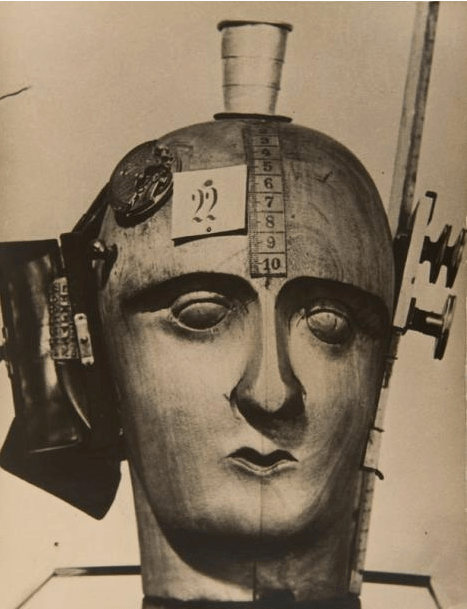
Being judgemental has come to mostly mean having or displaying an overly critical point of view. However, without judgement, one is merely rudderless. Those who say, “Don’t judge” or “Don’t diagnose,” are probably saying, “Don’t be overly critical or inexpert,” but otherwise are being a tad dishonest because that’s all we’re doing with each other all the time, albeit so poorly that we find ourselves living in confusion half the time. What if, given our constant evaluation of each other and everyone else, we could learn to do it a wee more effectively?
Some such measurements are based on understanding culture, intelligence quotient (“IQ”), education, personal force, charisma, and experience. The degree to which one knows about these parts of a person’s or group’s history and character, will determine the usefulness of any measurement.
Culture influences behaviour. Every culture has its own manners, modes, and rules of correct conduct—something much lost in the West since the 1960s, unfortunately. Good manners can be taught to a person regardless of their chronic tone (stuck in tone levels below 3.1) and go an extremely long way to support social cohesion and cooperation. The death of Emily Post’s wisdom was a grave loss for us all.
IQ is the measure of an individual’s general analytic abilities. It’s a number, typically between 40 and 200, that is arrived at using timed problem-solving tests and then compared to the statistical norm, or average, for their age. IQ is an important general metric of intelligence as related to common everyday skills. It’s a fact, though, that a high IQ does not automatically indicate that a person is intelligent enough to be pro-human.
Education is also a metric for behaviour; so is schooling. The type of education, whether it is formal or street, will modify behaviour accordingly. A well-schooled person might understand phenomena better, assuming the institution teaches such things as critical thinking—a rare enough occurrence right now—and therefore be more resourceful in life. If they are low-toned, however, schooling them can be a very dangerous thing for the rest of us. As for indoctrination—teaching people what to think instead of how to think—has become de rigueur in state-run schools and higher education. Indoctrination makes it challenging to understand life and suppresses a higher-toned person’s natural inclination towards social behaviours.
Then there is personal force. This can modify the tone’s volume of expression.
There is also charisma, or “magnetism,” which allows a person to attract or repel others; that too can be measured: How many people appear to fall under a person’s influence or charm? Obviously, a person at 1.1 or 1.5 with low charisma isn’t nearly as dangerous as one with a lot.
Experience also modifies behaviours, similar to education. For example, certain tones are experienced in different ways at different times; a person with more experience of emergencies is less likely to be shaken by certain events and so on.
In addition to the above, there is also the “Big Five” personality traits and a similar HEXACO Personality Inventory Revised. The Big Five model describes very broad characteristics of personality: openness, conscientiousness, extraversion, agreeableness, and neuroticism. HEXACO stands for Honesty-Humility, Emotionality, eXtraversion, Agreeableness (versus Anger), Conscientiousness, and Openness to Experience. They both serve as indices when evaluating habits of behaviour, which can be useful.
The Tone Scale is another tool for measuring behaviour. It was originally designed to be used by Dianetic and Scientology auditors but is also a pretty useful instrument for any non-practitioner to begin any evaluation of a person or group in order to better understand them and predict their actions.
The intriguing result of the scale is that, through its use, Scientology 1.0.0 manages to offer some consistently workable methods for resolving many previously unsolvable mental maladies.
Science of mind

There are several reasons why the fields of psychiatry and psychology are both “soft” sciences. In addition to those touched on in Chapter 25, there could be another.
The hypothesis posits that the human being serves not only as a node in universal consciousness but paradoxically also as a hub; each individual not only represents a point of information but also encompasses the entirety of information. Like the physical universe, where any fraction of it, no matter how small, could very possibly tell you about the whole, a human being’s mind is not a segregated artefact, some sort of closed, isolated system—a “black box,” if you will—but a window into all of creation. Hologram technology is a kind of analogy for this idea.
The fact that one doesn’t know everything about everything, however, is what I suppose is being referred to when it is said that we “use only 10% of our brains,” although I suspect it’s a whole lot less than that. (Neuroscientists get all tied up in knots about the “10% myth,” despite their inability to fully explain the vast differences in human intellect.)
Anyway, if this hub business is correct, it would explain a lot. It would explain, for instance, why the mind is too complex for “hard” measurement and predictive hypotheses, as many aspects of matter, energy, space, and time may be subject to. Using the mind to measure the mind seems as difficult (or impossible) a proposition as using the physical to measure the spiritual. Measuring the effects of the mind, though, can be done and is. Just so long as the mind that is doing the measuring presents those measurements for review. Repetitive review, that is. In other words, the scientific method.
Psychology can and does make somewhat comprehensive measurements of human behaviour, although the field does not always offer very consistent therapies to resolve less than sane conduct.
My point is that I’m about to make some comparisons to some disciplines in the hard sciences, and I’d rather have pointed out the problems in doing so before being taken to task for doing the very thing I just recognised as being virtually impossible.
Frequencies of vibration
Per the Hermetica (mentioned in Chapter 17) and verified by physics, literally everything in the universe is vibration, which is to say that all matter is actually a wave field of energy. That’s the way I’ve seen it put that makes the most sense to me, anyhow.
To plod along anyway, apparently it’s the frequency of the vibration that determines what sort of energy, or matter, or “particle,” one is dealing with. Ultimately, all material things are not actually solid but a form of energy of one sort or another.
According to this view, each element on the periodic table possesses a vibrational frequency. Actually, not “possesses” a vibrational frequency, but is a vibrational frequency. Physicists can readily figure this out by using the colour spectrum, as every element viewed through a prism has a colour, and every colour is a frequency. In other words, a chemist can picture an object with a spectrograph, look at its colours, and figure out what elements it is made up of, telling us what type of matter is under observation.
Everything—that is, every material thing—has a vibrational frequency, including emotions. Each emotion one experiences has a vibrational characteristic that affects one’s perceptions and experiences of life and, therefore, affects behaviours as well as health. Apparently, certain frequencies might heal and others sicken the body (if experienced over long periods).
The Tone Scale has some similar characteristics to the music scale, or the colour spectrum, or the electromagnetic scale (or even the periodic table, if all the elements were laid out as their vibrational frequencies instead of their atomic numbers).
Note: The idea that matter is vibration is philosophical, and although it aligns with some interpretations of quantum physics, it is open to debate. Rather than to state that all elements are vibrations, most physicists would prefer to say each element can be associated with unique spectral lines.

Communication between frequencies
Okay. So everything in the universe is vibrating, and each thing is vibrating at a certain rate. That is to say, each emotion has a distinct frequency.
To “tune in” to a person and get into near-perfect communication with them, one has to approximate their frequency. To have good communication with another person, one must observe where they are on the scale and try to replicate that emotion.
However, if you wish to raise anyone up the scale, then there is a technique that works every time. Well, at least it has in my experience.
If you notice, the scale is numerically graded: 0–1, 1–2, 2–3, and 3–4. Each one of these is a “whole tone.” It looks like this:
0 – Death
1 – Fear
2 – Antagonism
3 – Conservatism
4 – Enthusiasm
Each band, or “whole” tone, is further broken up into two parts thusly: 0 – 0.5 – 1.0 – 1.5 – 2.0 – 2.5 – 3.0 – 3.5 – 4.0. It looks like this:
0.5 – Grief
1.5 – Anger
2.5 – Boredom
3.5 – Cheerfulness
The scale is numbered this way because, even though each emotion correlates to a particular electromagnetic frequency, like that on a radio dial, the emotions are listed in such a manner as to indicate affinities between emotional frequencies. They are plotted out to accomplish a kind of dial whereby anyone can strategise how to communicate by first “dialling in” and then “dialling up” either their own emotions, those of another, or even a whole group, thereby raising the tone.
You see, it was figured out that any tone within a half tone is still more or less real to one another, and therefore one can perceive or “hear” the other, whereas a whole tone is too unalike, too dissimilar, dissonant, and thus perception of it is distorted, blocked, or altered.
In other words, a person in Grief (0.5) will communicate well with someone in Fear (1.0), because Fear and Grief, although different emotions, are similar enough frequencies that some mutual understanding might occur. This includes those tones in between Grief and Fear: 0.6, 0.7, 0.8 (Propitiation), and 0.9 (Sympathy). A person experiencing grief may find it difficult or impossible to communicate effectively with someone who is at or above 1.5.
You can easily test this half-stop factor, which pertains to shared reality and potential communication, if your good at replicating emotions.
Raising tone
Try it out, though. Next time you encounter someone in grief, agree with them entirely as to whatever their loss is, shed a tear or two maybe (don’t fake it), and once communication has been firmly established slowly, carefully introduce topics regarding Fear, allowing the person to match it before moving to the next tone up. Above Fear, take care to have each tone be an emotion that the person might feel towards someone or something else, rather than aimed at themselves.
As the person’s tone rises, they become more extroverted, get a little more attention off themselves and, above 1.0, onto the environment instead, and thus feel better. Get them to Anger by discussing something they might be angry at, then Antagonism, which tends naturally towards extroversion as do all the tones above it (although true extroversion and interest in life don’t occur until 3.1).
This extroversion factor cannot be stressed enough because even though attention tends to be something people below 2.0 overly crave – to want to get attention rather than give attention – their attention can still be directed outward, away from themselves. Extroversion, if only very slight, begins above 0.3 and increases exponentially above 2.0, and especially above 3.0. The true extrovert, rather than a performative extrovert (extroverted behaviours below 2.0 are mostly instinctive or an act), is above 3.0.
For instance, when raising the tone of a person in Anger, 1.5, don’t match their emotion by getting angry at them; they will only introvert further, but rather get them angry about someone or something else exterior, i.e., “What about Big Food, Big Pharma and Big Insurance making everybody sick?!” or something. Try to have them get angry about something that is probably true.
As for the lowest tones, 0.01 can possibly, maybe, perceive 0.5 enough to communicate, but it will be pretty hazy. 0.1, which is Victim and is heavily celebrated and promoted by the government and media right now, is pretty out of communication but, as shown on the scale, can communicate with grief, 0.5.
If you’re good at creating (not faking) all the tones between 0.05 (Apathy) and 4.0 and using them to transport people or groups from minus 2.0 all the way up to 4.0, people may come to view you as some kind of a magician. Also, if you are pretty proficient at this feat, it means you are probably above 2.0 because people below 2.0 are usually just awful at creating emotions above 2.0 (unless they are trained actors, but even then…).
Wave characteristics
There are three basic wave characteristics: the “flow,” the “ridge,” and the “dispersal.”
Like their labels indicate, there are emotions that seem to move somewhat steadily, to “flow.” Others spread out in different directions and “disperse.” Other emotions are jagged like a “ridge.” There are no bad or good wave characteristics; a flow is a flow, like a river; a dispersal is a dispersal, like ink dropped in water or the phenomena of entropy; and a ridge is a ridge, like a wall or beam in a house. They’re important to know, though, as regards the ARC triangle, as I shall explain.
They go like this:
0.1 — Victim ————- ridge
0.3 — Undeserving —— flow
0.375 Making Amends — dispersal
0.5 — Grief ————– ridge
0.8 — Propitiation ——- flow
0.9 — Sympathy ——– flow (“co-flow”)
1.0 — Fear ————— dispersal
1.1 — Covert hostility — flow
1.5 — Anger ————- ridge
2.0 — Antagonism —— flow
2.5 — Boredom ———- dispersal
3.0 — Conservatism —- ridge
3.3 — Strong interest — flow
3.5 — Cheerfulness —– dispersal
4.0 — Enthusiasm ——- flow
Anger is a ridge-wave. Everything is extremely conditional. It’s a “no!” emotion.
Boredom is a dispersal-wave. Flipping from one thing to another, one channel to another, scrolling TikTok, “Ho hum. Say? What’s that? Oh, that was nothing. Ho hum.”
Conservatism is a ridge, a person in this emotion tends to be “against” things. Hesitant, cautious: “Well, I don’t know. Let’s think about it, not rush into anything.” Ridge waves want to slow down or stop flow waves, which can be good or bad, as there are plenty of flows that are destructive, such as Covert Hostility that pretends to be “for” things, such as “the public good” (possibly the most destructive phrase in the English language).
Enthusiasm is a flow emotion; you can talk about this or that, do much of anything, always be up for a creative activity, or just sit quietly. “Hey! That sounds like it’ll help; let’s do that.” It’s a “yes” emotion.
Wave characteristics act sort of like hyperlinks, but not necessarily with any understanding. Despite the utter lack of understanding between a 1.5-angry person and a 3.0-conservative person, there can still be a sense of simpatico between them. The 3.0 frequently “agrees” with the 1.5 without understanding the 1.5’s true motivations and goals. For instance, when the 1.5 advocates for initiating a “war on drugs,” the 3.0 enthusiastically agrees, “Yes, that’s the ticket!” “I don’t want my kids taking drugs!” the 3.0 exclaims, oblivious to the fact that the 1.5 is only advocating for increased police powers and has no plans to effectively address substance abuse.
These wave similarities are another reason to be concerned about majoritarianism, the actual name for our amazingly faulty “democratic” system. The ability of those between .01 and 3.0 to perceive actual evil is extremely poor. People at 3.0 are too often quite likely to support the Mussolinis of the world because “he keeps the trains running on time,” and, as a result, they may overlook the rounding up of Jews and putting them on those very same trains for deportation: “Well, they’re foreigners anyway,” thinks 3.0. “Perhaps they’ll be happier somewhere else,” imagining these deportees dancing happily to klezmer music in some far-off place, perhaps Poland.
A much more worrisome hyperlink is between 1.1, Covert Hostility, and 4.0, Enthusiasm. Much creation occurs at 4.0 and higher, and the 1.1 finds it as simple as all get out to attach themselves to artists who are often in a flow state when working (although they might be below 2.0 the rest of the time, which explains the dangerously goofy politics of many painters, musicians, movie actors, and actresses). The person at 4.0 will rarely recognise the 1.1 parasite because the 1.1 will be making all the “right” or “interesting” flow-type noises and will happily tolerate them until they find the knife sticking out of their back (or, more usually, the needle sticking out of their vein). “Oh, that’s a terrible blow,” says the 1.1 to the 4.0. “I feel so sorry for you. Here, take a couple of these: they’ll help, I promise.” If the artist is also a celebrity, one can all too often find them almost entirely surrounded by 1.1 people.1
Mimicry
These “hyperlinks” show that each tone below 2.0 repeats the wave patterns of the tones above 2.0. This therefore creates a kind of sympathy or co-emoting between certain emotions that allows a lower tone to appear to understand a higher tone. The acting profession is a good analogy for this.
Actors are skilled mimics. Their job is to pretend to feel emotions so convincingly that, when performed, we, the audience, believe they are real. It is probably rare, though, that an actor fully understands the emotions they are portraying, which brings me to the main point. We believe they understand and so will be more than willing to look to them for how to think about the world—a big mistake.
But people in the lower tones often aren’t acting. Similar to a marionette, they merely carry out the behaviours dictated by the frequency they find themselves trapped in.
For instance, as just mentioned Covert Hostility, which is a flow wave, mimics Enthusiasm, which is also a flow wave; Anger, a ridge wave, will easily mimic Conservatism, also a ridge wave; and Fear, a dispersal wave, can mimic Cheerfulness, as impossible as that sounds. Again, this is mimic, mind you, not understand; mimic means imitate (someone or their actions or words). That is, a form of pseudo-communication between emotions without any degree of actual understanding.
You see, apparently the higher tone may confuse this mimicry as a shared understanding or a duplicate reality, which is why so many people living at 3.0 will fall in with 1.5 people, or a person at 3.3 or 4.0 might be fooled by the noises made by a 1.1. This phenomenon can lead to a troubling disconnect, where individuals are drawn into a web of superficial connections, mistaking mimicry for authenticity. As a result, many may find themselves aligning with leaders or ideologies that do not genuinely represent their values, creating a cycle of disillusionment and confusion.
Social veneer
Another thing I should mention is “social veneer.” Similar to a “persona” which means character (as in a play where the actors would wear masks) a social veneer can effectively conceal any tone lower than 2.0; individuals unaware of this factor frequently mishandle tones below 2.0. Some of the “nicest,” most “polite” people you meet are below 2.0, as are some of the most magnetic personalities; psychopaths are too often in this category. Magnetic I mean.
A social veneer, in contrast to actual manners or social conventions, serves to “cover up” or disguise the anti-human aspects of any tone lower than 2.0. An individual’s social veneer may be deliberate or pathological; at the end of the day much the same thing, really. The social veneer does not conceal the result of actions, however.
Observing behaviours and their results—psychometrics—can help one easily penetrate all social veneers, although it may sometimes take time to perceive patterns of conduct.
1 These wave characteristics are discussed in the Philadelphia Doctorate Course, Lecture 23 (1952).
 Arthur Ronald Conway Hubbard
One response to “Evaluation”
[…] My father was not the first to propose this idea, but his discussion of them as such was the first time many people had heard of them. More interesting, though, is the way he organises, labels, and metricises them, which is completely new. By observing them in this manner, he was also able to come up with ways to get unstuck if you got trapped in the lower mental levels or in some kind of performative dramatisation of higher states, as mentioned in the section about mimicry in Chapter 32. […]
LikeLike