The Wild Mind – Part V
Scientology 1.0.0 – chapter 12
As mentioned previously, I became aware of an anti-religious narrative in the late 1960s and 70s. What was also happening was another narrative, a kind of leitmotif if you will, that had us all living in pretty terrible times.
I mean, there were problems on the planet, as there always are, but somehow more and more attention was being paid to them: life had never been more precarious and was getting more so every day; energy supplies were running out; there were more wars, killing, and murder than ever, it seemed; people were starving all over; atomic annihilation was imminent, and even if we ever managed to survive that, the planet was poised to freeze over by the year 2000 anyway, finally extinguishing all life at last (global warming 70s style). Some of this was sort of (maybe) somewhat true, obviously, as it ever is. I’m thinking that what was different, since the late 1950s anyway, was that, besides newspapers, radio, and magazines, now TVs were blasting this news into every living room everywhere. (Eventually, there’d be TVs in bedrooms, kitchens, dining rooms, and bathrooms, and now, today, purses and pockets too.) But anyway, back then, there was truly a sudden and noticeable rise in the influence of mass media via screens.
People coming into Scientology at this time were also somewhat captivated by this doom and gloom and often worriedly discussed man’s peril. For awhile there, because we were a relatively small community, I thought it was just us thinking a lot about this stuff. I mean, we received all the newspapers and magazines, so we knew what the media thought, and we talked about all of it, of course. But later, when I came into contact with the larger world, I discovered that people were exhibiting definite signs of seriously overtaxed limbic systems everywhere I went. In fact, by comparison, we, in our little society, were a pretty jolly bunch despite the world news, but there was a difference: we had no screens.
At the same time, I was digging into history and was slowly discovering a completely different story: a story of near miraculous success and triumph.
So what gives? Certainly, there are always serious problems in the world with some pretty low points, but also many high points. And, depending on the premise of one’s analysis, many good arguments could be made for plotting a persistent rising trend despite this volatility. Using such indexes as infant mortality (down), violence (down), availability of calories (up), standards of hygiene (up), life expectancy (up), availability of opportunity (up), IQ (up), literacy (up), and on and on, you could plot out a graph showing one of those famously named “hockey stick” trends with affluence beginning in the 18th and 19th centuries and zooming way up after 1960.
It would seem to me, at least, that the past five or six thousand years have been a gradual beneficent tide, ultimately lifting all boats everywhere. So, even with all the screens, why so much attention to all the bad news? There’s all this good news, very easily available, especially on the new screens, so what was all this depressing, persistent pessimism all about?
After thinking about this for many years, I have to agree with the view that the issues are, at their core, meaning and, by extension, value. People were being encouraged (here in the West, anyway) by some mysterious means (mass media streaming through billions and billions of screens) to think of life as fundamentally meaningless and values as purely subjective. God had, evidently, been “murdered” in the 18th and 19th centuries after all, and now we are being sold the replacement gods: Media, the State, Money, Power, Drugs, Sex, and the Famous.
Maybe because basic survival was becoming increasingly easy for growing numbers of people, we were getting more leisure time and we were quite naturally spending increasing amounts of this hard-won time reading those magazines and, mostly, watching these pernicious and ubiquitous screens.
On top of that, life, becoming less of a struggle, has perhaps begun to be innately less challenging; when you switch out one paradigm, one set of challenges, you conceivably ought to have another to replace it, preferably something better and possibly even more challenging. It might be that this recent paradigm shift has proven to be too hard, or, more likely, just too fast, for most of us to create a new one.
What is it that could help us navigate this conundrum? The state? Evidently, so many of us are clamouring for it to do so. Myself, I don’t think so.
What I’m getting at is that this loss of familiar forms of Meaning and the rising subjectivity of Value is the Humpty Dumpty all the king’s horses and men won’t ever put back together again, no matter how much they are appealed to to do so. Of course not, since kings and men never actually “created” Meaning or Value in the first place.
So what did? And possibly still does?
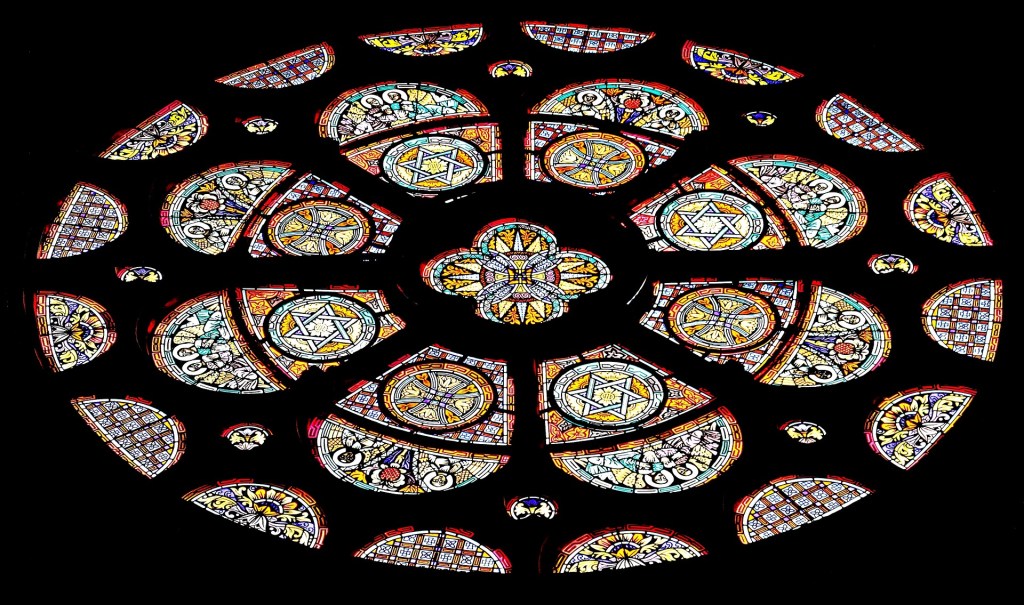
Religion continued
The evolution of civilisation
The level of cooperation required to build up from small tribal groups to towns and then cities is, at each level, complex. Civilisation, which started to appear, rather suddenly, it’s said, five to six thousand years ago, is several magnitudes more so. Religion, unquestionably one of the most important organising principles of civilisation, is a part of this evolution because it supports and aids in the coordination of an extreme complexity: the thousands upon thousands (now billions) of extremely diverse and differing wild minds.
As fantastically diverse as all these minds are, they do seem to have some qualities in common. One such is that people instinctively know, in some inexplicable fashion, that there’s a lot more to this universe than meets the eye. This is a big idea, and it has dire consequences if the mind’s attention is not properly encouraged to look up instead of down. (Looking down is probably the “existential crisis” one reads about.)
Not directing this absolutely mind-boggling number of minds to look up at the fact that, despite evil and tragedy, there is a mind level far greater than the individual or the sum of the collective, is the very definition of folly. When groups of people connect to this intelligence and its sheer awesome beauty, there can be cohesion; people sharing something greater than themselves, even greater than the mighty state (kings, priests, etc.). But when you disconnect, or subvert this experience, pretending there is no such greater reality, this problem of meaning gets co-opted and “solved” by mortal men, and then watch out!
The notion that anyone could single-handedly dictate this highest mind is risible; such a person would be guilty of grave hubris if not outright blasphemy. Religion fights this tendency to pride in men by pointing out that a man, even all mankind, is but a fraction of the whole. Getting too big for one’s britches gets one onto the wrong side of God, especially the jealous side described in the Iron Age survival manual, The Old Testament: Pride goeth before destruction, and an haughty spirit before a fall (Proverbs 16:18).
Also, as previously covered in the first part of this article (The Wild Mind – part IV), religion makes ample room for the humanity of man, with all his wonderful imperfections and messiness, and so allows room for a means of operation and cooperation in a reality that shall forever far, far exceed his ability to fully comprehend it. This is the side of God as described in the Roman Period instruction manual: The New Testament, wherein is delineated the God of Love and Forgiveness, so necessary to the operation of the intricate human systems which are embedded in complex nature; systems that, for them to work, you need only to let them be.
The widespread lack of trust in both God and men today should not be surprising. In the halls of government worldwide, ignorance and the arrogance it cultivates lead officials to develop a disdain for citizens, which in turn fuels their pessimistic narratives and the simplistic, force-based policies that are perpetually imposed on societies. Such as what to do about viruses, climate change, economics, and “national security”, these are all examples of the state and its actors assuming they know much, much more than they actually do and are egged on by the collective madness of the “loud crowd” minority, something lately being referred to as “mass formation psychosis”, which is just the latest term for mass hysteria.
Guided to the good
When civilisation begins in earnest, it arrives with legal codes like the Code of Urukagina of Lagash, who served the god Ninurta (24th century B.C.), and later the Code of Hammurabi, as dictated by the god Shamash (1755-1750 B.C.). These legal codes always came from the gods or God because God is the ultimate authority (authority in the sense of author, an intelligence who invents or causes something), so even kings were subject to their commands, in theory anyway. These codes dealt with various sundry and mundane businesses, but they also contained the seeds of the moral codes yet to be developed. In those days, there were lots of city-states that each had a founding god, and so there were lots of codes, but they all had this moral foundation, if you will.
Then Zoroastrianism appeared around the year 2,000 B.C. I don’t know a lot about Zoroastrianism, but I do know that it’s about order vs. disorder, which is possibly a much better way of looking at good vs. evil, since good and evil are abstractions and often a matter of opinion; order and disorder, not so much. Zoroastrianism teaches a duotheistic model and has a moral code. “Good thoughts, good words, good deeds.” There’s a lot more to it, but who could disagree?
Eventually, monotheism came into play. I don’t know whether it was originally through Akhenaten (1353–1334 B.C.) or through Moses (ca1391–1271 B.C.) or from some other luminary or by some other means, because there were simultaneous, as well as earlier, forces conceiving the monotheistic model as well. But if I remember correctly, Akhenaten was the fellow who made serious waves with his Great Hymn to the Aten. On the other hand, today’s worship of one Supreme Being, one God, really begins when Judaism evolves from Yahwism in the sixth century B.C., or so, right in the middle of the Iron Age when Western civilisation is ramping up. Civilisation is becoming increasingly cohesive and the historical age, as we know it, is beginning at last.
With monotheism begins a unifying factor that will eventually wipe out polytheism in the West, and begin the slow ascent toward the level of civilisation such as we live in today.
My point of all this being, these changes would seem to indicate a gradual rise towards an ethical unity of all peoples.
Ethical unity
Those god-given legal codes and, with the rise of organised religion, God-given moral codes, were among the most important organising principles of early civilisations.
The book I’m thinking of is the Book of Exodus in the Old Testament, which is the second book of the Pentateuch, or Torah (specifically Exodus 20: 2-17). This is where are recorded the Ten Commandments. (Actually, there are six hundred and something statements – called commandments in most English translations – but these are the ten in that chapter, and the ten most well known in Christendom.)
Sure, knowing a little about psychology goes a long way in understanding the intentions and motives of everyone in a small group, but there’s also got to be a known code of correct conduct if one wants to start succeeding in the form of more complex social arrangements. Starting with getting good, orderly behaviour codified and known; most importantly, the “rules which will suffer no bending”, such as these ten specific commandments (rather different than mere guidelines or suggestions).
The Ten Commandments are a list of keen observations for the good guys if they want to stay good guys. This then leads one right to the core of the problem that moral codes are addressing: the evil (unreason) that lies within oneself, within each of us. As one deals successfully with the forces of nature, they also have to be able to confront and conquer the unreason that exists internally in order to survive beyond the merely physical and eventually achieve the sophisticated levels of creativity, industry, cooperation, and etiquette demanded by great cities and civilisation.2 When failure to achieve this herculean task becomes general, then, regardless of the sophistication of markets, technology, and everything else, civilisation collapses.
Here are the first four:
1) I am the Lord thy God who took you out of the land of Egypt, out of the house of bondage.
This is the first commandment in the original Torah, or Pentateuch.
Amazingly, it’s the one that wrecks any and all arguments in favour of slavery some two thousand years before its abolition (although the Ten Commandments originally applied only to the Israelites, who kept non-Israelites as slaves because non-Israelites didn’t count as people, but when it was adopted by Christians, it actually then applied to literally everybody; talk about delayed cognition!).
Today, one common way this commandment is violated all the time, though, is by our perpetually allowing the state to think it can “dispense” or legislate rights. Human rights can only come from the highest authority, beyond men.
People generally misunderstand what actually constitutes a human right. Rights are foundational, and misunderstanding what they are results in all the political and social confusion people are experiencing today. Rights are often confused with privileges. The state may regulate a privilege, like the use of motorways or common areas. Allowing the state to grant rights, however, makes of ourselves, if not slaves exactly, servants in bondage to said state.
Anyone who disagrees with this interpretation should try not paying income or property taxes.
2) Thou shalt have no other gods before me.
This one gets ignored when we place the state, security, status, money, power, fame, etc., as supreme values.
3) Thou shalt not take the name of the Lord thy God in vain; for the Lord will not hold him guiltless (will not forgive) that taketh his name in vain.
Man! This one gets wrecked all the time and is probably one of the main reasons there is, and has ever been, any upset with religion in the first place (thus its being unforgivable). How? Think of all the wars and crimes committed in God’s name, even unto this very day!
This is the God of the Old Testament, by the way. They attributed all natural phenomena to Him, meaning that if you stepped off a cliff and broke your neck, you were definitely not “forgiven” for your error. With the arrival of the New Testament, God begins to be known as forgiving in the same way men can forgive one another.
4) Remember the sabbath day, to keep it holy. Six days shalt thou labour, and do all thy work: But the seventh day is the sabbath of the Lord thy God: in it thou shalt not do any work, thou, nor thy son, nor thy daughter, thy manservant, nor thy maidservant, nor thy cattle, nor thy stranger that is within thy gates: For in six days the Lord made heaven and earth, the sea, and all that in them is, and rested the seventh day: wherefore the Lord blessed the sabbath day, and hallowed it.
What’s the deal with this one? Well, like the 1st commandment, it elevates man from slavery and servitude and celebrates freedom, for man is meant to be free (to choose and be responsible for those choices, that is). This is about man’s dignity, for even your workaholic is, at the end of the day, just a slave to his or her compulsion. You could also say that this one commands animal rights too, for animals deserve to live free of pain and suffering. Free from pain and suffering at our hands, at any rate.
I was going to leave the commandments there, but then I thought I’d also like to mention the fifth:
5) Honour thy father and thy mother: that thy days may be long upon the land which the Lord thy God giveth thee.
You don’t have to like your parents; you don’t even need to have had good parents for this Commandment to make sense. Without parents, there’s no you, no long days upon the land, no nothing, and there are no people besides.
You have got to have parents, no parents, no individuals. The individual is the cornerstone of all great civilisations, and the family is the bedrock.
And then children must be raised by both parents if they are going to have a decent shot at growing up to be responsible, autonomous individuals which is hardly possible if both are absent all day and then too exhausted from work to do any real parenting. Also, all this experimentation with single parenting isn’t working out very well, if crime statistics are any measure.
Most parents usually do a good job raising pretty okay children who become civilisation’s future builders, and so on, but what I really wanted to do here was point out that it is a truism that every insane group, every totalitarian organisation, or ideology apparently always seeks to wreck the family. They may allow the sex act; they might even revel in it, but they will either suppress the coming into existence of children or badly neglect them after they are born.
Keep an eye on this one. Notice whether or not the group you are part of or that you support upholds the family as a fundamental and foundational value. Don’t listen to any rhetoric. Look for this, inspect it for yourself, and you might discover that the family has been under siege in most Western countries for a long time.

Okay, that’s all I’m going to say about the Commandments. There are, of course, five more but I left them off because they’re usually better known and understood.
So, to wrap up this section, whenever a good person breaks this code, not only does the society or group fare less well, they do too. Lie, and your life falls apart. Steal, and your life falls apart. Cheat, and your life falls apart, and not just if or when you’re caught1. What’s making these things happen? Sometimes you want a different result, but no, no, no. Well, this is morality and its big brother, conscience. Those behaviours that help result in order and the good are those that, when ignored or dropped, result in evil, disorder, and even chaos. If an individual violates this code, things go bad for them; if a society violates this code, things really go to hell.
Religion and moral codes are not the only factors in building a civilisation, of course. Culture, manners, industry, leadership, management, defence, technology, specialisation, market forces, and much more all play vital roles as well. But without recognition of and adherence to this strong moral code, you can forget civilisation altogether; just look at the many failed states the world over.
Morality
There is probably no better way to cohere as a group than a shared challenge. You put a bunch of people together and they will probably cooperate somewhat, certainly, but the first time they are met with true opposition, or adversity, and manage to pull together and win, now that’s when you get a real team. Something bigger, greater, than you, like the environment or an opponent, can be challenging, and it’s often best met by cooperation with others if you’re going to survive. I’d suppose this is partly how morals get figured out in the first place and become codified, by means of these eternal trials.
The way to keep a group functioning well together is to get these rules worked out and make sure that they are embedded in the group mind through the use of ritual. When everyone congregates, kneels and rises, sings together, celebrates beauty, gives thanks, etc., this brings people together, but it is also in aid of reminding us about the Code. Such ritualisation affirms cooperation, and then all eyes are raised, directed at the same ideals: ideals of the good.
Prior to Christianity, whatever your religion, it was usually perfectly normal to go raid your neighbour, take slaves and loot, occupy foreign territory, and so on; your gods generally approved. Now, this didn’t exactly stop with Christianity, old habits die hard, as they say, but running around willy nilly raping and raiding eventually began to seem a bit déclassé. Slowly, bit by bit, things were calming down just enough to really get the ball rolling in the civilisation game (about 500 years ago).
At the same time that Judaism was developing in the Levant, interesting things were happening in Greece: Western civilisation was beginning. Over the next eight hundred years or so, Greece, and then Rome, stepped up the game considerably. When it came to pass that the Roman Empire was in grave disarray, having fallen prey to criminal economics (as all empires eventually do), militarism, and dictatorships, Constantine I, in an attempt to give it a new lease, decreed freedom of religion. Basically, he set in motion Christianity to eventually be the first religion and, over the next few centuries, as the empire crumbled, it finally vanquished paganism. It was the Christian orthodoxy that brought a new order to the West, one that would survive Rome’s eventual collapse and would accommodate a more advanced civilisation.
How? Well, by means of many, many things, such as an embodied God (Jesus), which brought men into direct contact with the ideal of man, and the dictum: love thy neighbour, and so much more. But there are a couple of ideas that I’d like to highlight that, in my mind, really stand out as truly advanced technologies.
Ending violence
So-called “honour” cultures are endlessly feuding and fighting. Such deadly childishness is quite common in some parts of the world even today. Thus, they effectively block the high degree of cooperation necessary to build truly advanced civilisations.
There’s a lot in the Bible about what to do about this problem. In the New Testament’s Book of Matthew, it says, But I say unto you, That ye resist not evil: but whosoever shall smite thee on thy right cheek, turn to him the other also. (Matthew 5:39), highlighting one powerful solution. Also in Matthew, For if ye forgive men their trespasses, your heavenly Father will also forgive you. (Matthew 6:14), indicates another.
There are many records of people changing the world with these tools, such as the lives of many of the saints and others. Gandhi and Dr. Martin Luther King Jr. famously used the principle of turning the other cheek, which does not mean acting like a wimp, to powerful effect.
And this business of highlighting forgiveness? Although the doctrine of forgiveness is far older than Christianity, in Christianity it is a central doctrine, and as such, it was a major breakthrough.
Forgiveness and turning the other cheek end what often becomes endless rounds of tit for tat; the Hatfield and McCoy families could have definitely benefited. Both ideas are pretty advanced stuff, especially given the moment in history when they arrive on the scene. I mean, to forgive was something the Romans, who were famous pragmatists, never did, so the timing of the New Testament is very interesting. Perhaps the Roman Empire did not “fall” so much as it simply became obsolete.
Both ways of stopping endless fighting and violence take enormous courage and fortitude, though, so they aren’t easily done. But if one can do the first and the second, there’s hardly anything that can stand up to it. Not for very long, anyhow.
In addition to the Ten Commandments, these deceptively simple-seeming ideas have had an incalculable effect on bringing order over the past two thousand years.
Ethics vis-à-vis morals
Ethics and morals are generally considered synonymous in philosophy, but in Scientology 1.0.0, they are separate things.
In Scientology 1.0.0, ethics are the underlying principles of all moral codes, regardless of culture, religion, or region. Morals, on the other hand, are detailed codes of conduct.
Ethics is about reason itself, the workings of the underlying principles of existence. Reason is the subject of dealing with reality (the “rules which will suffer no bending”) no matter where you find it, from Sunnyvale to Timbuktu. Reason is man’s primary survival tool.
Morals are defined as rules of good conduct and are derived by means of observing what works, what serves, and what often both informs and is informed by culture. This cultural factor can make a code seem somewhat arbitrary to different people. For instance, in some places, polygamy is okay, and in other places, patting kids on the head is a big no-no. Contrastingly, ethics is the why of certain kinds of conduct working whilst others don’t, no matter the culture, and comes to us via philosophy (although in philosophy this has become mangled and confused too – more on that adventure later).
From the view of Scientology 1.0.0, moral codes can be somewhat successfully enforced by society. However, for a person to be considered more than just moral but truly ethical, they must be fully rehabilitated as a self-determined individual. This is because the ability to reason, and thus to be fully responsible, cannot be enforced in the same way you can’t successfully beat up crazy people to make them sane (as used to be common policy in asylums as recently as the 1970s, and is still normal practise in some places today). Merely suppressing bad behaviour doesn’t work in the long run. In the end, only by means of the application of humanitarian therapies can one be rid of immoral and unethical behaviours.
So, although a moral code may encapsulate ethical principles, it is usually more specific in order to suit the needs of the culture, of which, hopefully, there will always be many.
Ethics is a more general, fundamental, and higher-order means of operation, the actuality and actualisation of true reason, so that all individuals everywhere can make the increasingly intricate choices that are, and will be, so much a part of becoming more alive, conscious, and aware.
A thesis
The goal of civilisation is to make possible increasingly more conscious individuals and to facilitate an increase in individual responsibility. The goal of these higher-order individuals is to advance civilisation.
Indeed, it has been a rocky ride, but overall, given the statistics I cited above, the way things have been going since around 1500 has worked out fantastically well.
Many of today’s governments, political activists, “progressives,” pundits, and “experts,” however, shrieking at us through our screens as they do, seem hell-bent for leather to take us all backward to some vegan version of the hunter-gatherer. Or forward to a totalitarian slave-labour state. Or something. Take the Democrats; they are pining for the days of the early 60s, while the Republicans are dreaming of the 80s. All this going backward shows a distinct lack of faith and imagination, and only results in stupid solutions to real problems. (See article, Infinity-Valued Logic.) I believe that all this furore is really just people trying to figure out how to have meaning in life now that religion is fading from existence.
So, to wrap up, in order to advance, the future of civilization will be entirely dependent on the rise of many far more competent and responsible individuals capable of working with increasingly complex, distributed networks of other individuals rather than the top-down monolithic structures we are so used to. We will need individuals who can act with greater autonomy and cooperation, and the rehabilitation of religion will, I believe, be a key factor in this evolution.
To be sure, the main point of my argument is that it has been religion, in fact, that’s been helping to realise this next level of human and group development over the past six thousand years. The thing to do now is figure out how to prevent religion from fading away, becoming yet another quaint superstition of our “ignorant past,” and getting it better understood and back into our lives as vitally relevant.
You can’t build great civilisations if they are populated by secularists.
Next: Religion continued and concluded
1 Everybody should read Fyodor Dostoevsky’s Crime and Punishment.
 Arthur Ronald Conway Hubbard
One response to “Religion, continued”
Excellent !
Looking forward to your next article.
Thank you.
William IAiN Jones.
LikeLike