The Wild Mind – Part XII
Scientology 1.0.0 – chapter 19
“And did the Countenance Divine, Shine forth upon our clouded hills? And was Jerusalem builded here, Among these dark Satanic Mills?”— William Blake, Jerusalem
Before continuing, I should mention there is an article about existence magic that is connected to these articles about the occult. If you are interested, it can be found by clicking on the = icon (site menu) at the upper right of this page or by clicking here.
Getting along
Way back when, societies were divided up into three estates. The estates of the realm, or three estates, were the broad orders of social hierarchy used in Christendom from the Middle Ages to early modern times in Europe. They were the first estate, the clergy; the second estate, the nobility; and the third estate, the peasants and bourgeoisie.
We sometimes forget how much more stratified, sectional, and divided societies all across the West used to be. No one of lower status could rub elbows with someone of higher station. From the Pope and monarchs down, you bowed and scraped, bowed and scraped, all the way through the various lower class structures until, finally, at the very bottom, one had to be satisfied with the well-loved past times of kicking pariah dogs and braining rats.
This endless kowtowing probably would have lasted forever if not for the fact that the entitlement of the first two estates, all too often unearned, inevitably breeds dysfunctional, incompetent, and sometimes psychotic leaders who are so utterly clueless that they do themselves in. All too often, the nobility and the majority of the clergy were selected based on inheritance, favouritism, filial duty, or other factors rather than their inherent goodness or worth. Then, because as many idiots are born to the nobility as anywhere else, the first and second estates will always eventually fill up with fools.
For instance, prior to the pact between the Anglo-Saxon leaders and Æthelred in 1014, where Æthelred agreed to limited powers as king (which had never happened before but which didn’t last in any case), if you weren’t the king, you literally did not own anything. You had no right to your land, your body, or any of your thoughts, which is similar to the plans that our current global elitists have for all of us modern riffraff. At any moment, for any cause, the king could strip you of everything: your castle or your farm, your family, your… you get the idea. Royal favour kept the nobility in line, and the Pope, more or less, kept the king in line. The “Caesars” captured the Roman republic in 27 B.C., handing down this tradition of “absolute monarchy” to us. (Not that republics work very well either. Republics usually descend into becoming democracies, and democracies are always short-lived because they’re so easily stolen by elites, like the Caesars, or subverted by the mob, who are too easily enticed to vote for “free” stuff paid for by the more hard workers in society and then the Caesars, as is happening right now.)
The old mediaeval guild systems, too, were extremely closed off to non-members. Towns and regions fought against one another for political power. Nearly every social structure was based on strict hierarchies into which one was born and which gave or denied varying degrees of status and power. Pecking order was the order of the day, except in extremely rare cases, all the way through history, until pretty much the past eighty to a hundred years or so (social class, or caste systems, really began to break down only after WWI).
By the way, this systemic shortsightedness did not affect the majority of the third estate, the Bourgeoisie, who gained their position primarily through skill and merit. They went on to rule the world, which is why socialists consistently target them for destruction, what with merit being the most tangible, objective human trait.
These things are not unknown to many people, I know; I’m just bringing them up to frame my continuing description of not-so-secret societies.
Freemasonry
All those rigid social structures would begin to be seriously challenged in the 17th and 18th centuries. One of the most successful challenges came from the brotherhood of Freemasons.
Again, Natural Law. As understood by the early Enlightenment philosophers, Natural Law includes the observation that all people have inherent rights, conferred not by acts of legislation but by “God, nature, or reason” (see The Wild Mind, Part XI). These are not the “rights” enumerated by sham organisations like the United Nations, which list some thirty, most of which are privileges, and certainly not the rights “granted” (again, privileges) by most secular governments, governments that would rather have all people blissfully believe that it is they and they alone that have finally and at last replaced an all-too-invisible God.
(By the way, mistaking privileges for rights results in everyone eventually being in everyone else’s pockets, resulting in social upheaval, conflict, and chaos. It is possibly this very chaos which is the actual goal of so many governments, certainly of the U.N. It would explain why they seem to “fail” all the time: if you can upset the people enough, then enough of the people will demand a police state. Bada bing bada boom.)
According to Natural Law, actual human rights are: life (everyone is entitled to live); liberty: everyone is entitled to do anything they want to, so long as it doesn’t conflict with the first right. And estate: Everyone is entitled to own all they create or gain through gift or trade so long as it doesn’t conflict with the first two rights (John Locke). Out of these, one can extrapolate things like freedom to worship as one pleases and freedom of speech and self-defence, specifically self-defence against tyrannical governments.

Okay. Well, despite what all the Marxists think, human nature is basically creative and cooperative. By means of reason, imagination, and this wonderful commodity called trust, humans tend to survive and survive better and better over time, as has been proven over and over again. (Unless, that is, one’s idea of a good time was prehuman, as the Eco-Fascists believe, then things really have gone to hell.)
Natural Law is observed as an extension of the operation of the Divine, and the Divine is observed as being essentially creative (what with God being the Creator and all). In nature, the Creator, or “Creation,” if one prefers, brings forth new forms, as observed by the astute Mr. Darwin. While some old forms die off, an increasing number of new ones emerge, resulting in an explosion of diversity in… life: there are many more different forms of life today than there were millions of years ago. When we align ourselves and our social systems of organisation with this perpetual, dynamic, and cooperative self-renewal into ever greater novelty, diversity, and complexity, we have the best experience of the material world that is, so far, conceivable. Nothing in the physical universe is at odds with itself—really nothing. I mean, one can imagine, say, that nasty black holes are “destroying” suns and planets and naughty big cats are eating poor old zebras, and consider all this volatility and dynamism “conflict,” but that says more about one’s state of mind than anything else.
By the 18th century, a few foresighted individuals, inspired by the Rosicrucian manifestos and the Corpus Hermeticum, began to recognise the concept of universal, even cosmic, cooperation. (The legendary Hellenistic figure Hermes Trismegistus, a syncretic combination of the Greek god Hermes and the Egyptian god Thoth, traditionally attributed the authorship of the Corpus Hermeticum, a collection of 17 Greek writings. For more on this, see The Wild Mind, Part X.)
If man were to advance to higher civilisation, it was obvious to all such people that the arbitrary power of ecclesiastical authorities and political structures would eventually have to give way to a more dynamic, more open form of social organisation, one based on individual merit and in accordance with Natural Law: “as above, so below.” What they needed was to find a way to gather and discuss these matters privately (secretly) in a way that circumvents the authorities without directly challenging them.
So, piece by piece, speculative freemasonry emerged.
There is operative Freemasonry—actual masons building things like cathedrals, castles, and abbeys—and speculative Freemasonry, a natural offshoot of transcendent alchemy. There are lots of theories of how this developed, but a definite connexion exists between the building of sacred sites and the realisation of the sacred individual by exploring the meaning inherent in sacred geometry and architecture (“as above, so below”). Anyhow, the record shows that at some point in the 1500s, intimate, quiet gatherings in sequestered locations, such as the back rooms of the guild quarters of operative masons, began to take place.
By the early 1700s, the masons had evolved from a trade union that obeyed the Catholic Church and pledged absolute fealty to the king into an “organisation of intellectual gentlemen who favoured religious tolerance and friendship between men of different religions, and thought that a simple belief in God should replace controversial theological doctrines,” according to Jasper Ridley, author of The Freemasons: A History of the World’s Most Powerful Secret Society. In practice, to participate in these organisations of intellectual gentlemen, one had first to declare their belief in (as in accepting as true) the existence of a Supreme Being, a nondenominational title that bridges any religious divide. This was an excellent place to begin, especially given the hostility that still simmered at the time between Catholics and Protestants, as well as general hostility toward any non-Christian beliefs. I mean, these gentlemen weren’t contesting the Supreme Authority of the Divine Architect like today’s “intellectuals,” just its arbitrary “representatives” on Earth. This is such a crucial distinction that it bears expanding: imagine today’s “lefties” were so hostile to “righties” that they began killing one another as the Catholics and Protestants were in the 17th century—that they were literally killing each other by the millions—and you can see their point.
There would eventually be many masonic organisations, called lodges, as well as many different kinds, but what many had in common was the doctrine that all people are created equal, as in having equal rights (equal in the eyes of God, or The Supreme Architect), and that those who showed true merit should be allowed the opportunity to contribute to the whole of mankind regardless of religion or social station (and, eventually, of sex). Really, this is as big a leap in consciousness as realising the Earth is round, that man could go to the moon, that one isn’t their mind or body, etc. Huge!
Man is indeed equal in his God-given (actual) rights, but not in his individual abilities. For instance, there are, say, chefs and carpenters, but there are also good chefs and carpenters, and there are better chefs and carpenters. However, if an individual is allowed the opportunity to contribute whatever unique qualities he has, then it can only be for the good of all. By “allowed,” the masons meant “get out of the way of,” as they understood that the church and state arrangement had deteriorated from bringing order to a chaotic and beleaguered Europe in the first millennium A.D. to simply being an obstruction to progress by the 15th century, the same way as most governments are doing today.
As a result of this profound rudiment, Freemasons came from many strata of society, and by means of membership in these lodges, they were able to bypass the many old and rigid strictures of the world outside.
The Freemason, like all learned hermeticists, understood the hierarchical nature built into Natural Law: everything comes in degrees of value and importance, a simplicity that is frequently misunderstood by those who perpetually push for “equality.” Thus they built a system of rites by which they could learn to recognise and understand life’s different levels of perception and comprehension, similar to the grades and forms in education that map, or are supposed to map, the levels of human development, but with the difference that innate consciousness cannot be forced. Masonic values—the opening of the third eye—learned through these degrees opened up vast and complex channels of knowledge, communication, and thus human creativity and cooperation.
The famous eye and pyramid symbol, so often interpreted as a kind of Big Brother, One World Order emblem, is actually more akin to the sky god Ra or the Eye of Horus, wherein Horus, the falcon-headed god, flying high above the Earth, can “see all,” and in doing so is wise. The pyramid symbolises the hierarchical nature of all things. (Horus is also the “son” who rescues the “father,” the king Osiris, signifying that all organisational structures eventually ossify and require renewal to remain viable, a lesson we have yet to learn in our oh-so-linear West. Philosophically and culturally, the West tends towards straight lines, as in point a to point b, while the East works more with cycles, such as point a to point b and then point a again.)
And that, again, is the essence of the occult. Apart from their links to Hermeticism, these fraternities and lodges emphasised freedom of thought and fully acknowledged the power of direct knowledge. This is what is facilitated in their system of degrees, which requires the initiate to study and contemplate the information therein for themselves, to rise up according to their own understanding and at their own pace, rather than being indoctrinated.
This direct knowledge business, by the way, is expressed in Scientology 1.0.0 as “What is true for you is true for you.” Truth cannot be forced; it must be obtained by one’s own free will. Truth is something that must always be observed for oneself. Schooled knowledge is called “education.” Obligated knowledge is what is properly called “indoctrination.” Forcing knowledge using threats, torture, and/or drugs is called “brainwashing.” (Telling people this or that, as may occur in closed circles of groups such as cults, is compelling knowledge that is not expected to be evaluated by the members but swallowed whole. Although this is indoctrination, it is not brainwashing, despite what the media likes to tell you. Brainwashing is a whole different animal, just ask the higher-ups at the CIA.)
Also, I should mention that many members of the brotherhood were deists rather than theists. While theists believe in a creator who intervenes in the universe, deists believe in a creator who does not intervene in the universe, which connects back to the gnostics of early Christianity, some sixteen hundred years before. The significance of this is the difference of view regarding the degree of man’s agency in the world. If the Supreme Being is a remote being, then it is actually up to his chief creation, man, to improve life on Earth.
So. Man, rather than being a passive, helpless pawn in God’s plan, is, in fact, the key agent in the project to perfect the universe. Now that is a very occult idea. It also fits perfectly with the goals enumerated in Scientology 1.0.0.
The Illuminati
Actually, very little is known about the Illuminati, founded by Adam Weishaupt (1748–1830). The record shows it only existed for nine years. Its short life and sudden disappearance is taken to mean, by some investigators, that it went deep underground. But what was it?
Apparently, Weishaupt entertained a far more aggressive program to achieve social and religious tolerance, political egalitarianism, and universal brotherhood; primarily he concocted a proto-socialist program (uh-oh). Basically, he seems to have been a radical, which makes him necessarily authoritarian, which is not an original Masonic trait. He recruited Masons and infiltrated various lodges with his assertive ideology but was eventually shut down in 1784, probably precisely because he was so disruptive. In fact, he made so many waves that he got shut down by the Bavarian government, and that, per the record, was that.
But was it? Illuminatists were involved in France’s reign of terror (1792-1794), and later, many of Weishaupt’s ideas got published in The Communist Manifesto, written by Karl Marx and Friedrich Engels, which was commissioned by the Communist League and published in London in 1948.
One thing is for sure: Weishaupt got the archaic terms “illumined” and “illuminated,” which mean “enlightened” (from illūminātus, “light up,” “brighten”), back into the lexicon. This explains why the term keeps popping up and is being adopted by other movements like the New Age. To illuminate is, of course, to give someone spiritual knowledge or insight. Perhaps not so much for our pal Adam.
Occultists

Who qualifies as an occultist? It is described by Antoine Faivre (1934–2021), a scholar of Western esotericism, that it is usually necessary that certain conditions exist for a document, group, or movement to be eligible for consideration by scholars as “esoteric,” an alternative and polite term for occult. The first condition is the concept of correspondences, both symbolic (as in hermeticism) and real (as in physics). Correspondences are said to exist among “all parts of the universe, both seen and unseen,” which is another way of describing man as a microcosm of the whole shebang. The other condition is recognition of the doctrine of alchemical transcendental transmutation and the transmission of this knowledge from a master to his pupil by means of initiation. Initiation is the action of admitting someone into a secret or esoteric society or group, typically with a ritual. A ritual is a religious or solemn ceremony consisting of a series of actions performed according to a prescribed order. In other words, the initiate is “donning” the knowledge in the same way that the form and shape of man embody the cosmos (“as above, so below”).
I’ll mention a few occultists here (and others who weren’t so much but played in the same vein). Whatever else one learns about them, they are never boring.
Giordano Bruno (1548–1600) is the fellow who conceptually expanded on the Copernican model of the universe, which was the heliocentric one versus the geocentric version. His theory was that stars were actually distant suns surrounded by their own planets, and (he might as well have signed his own death warrant here) he proposed that these planets might have life of their own, which many “scientists” still reject today. He was also a pantheist.
Pantheism is the belief that reality, the universe, and the cosmos are identical with divinity and a supreme supernatural being or entity, pointing to the universe as being an immanent creator deity still expanding and creating (emphasis mine), which has existed since the beginning of time.
If that wasn’t enough (and there’s so much more), Bruno taught the transmigration of the soul. That would be reincarnation, a big no-no at the time and savagely pooh-poohed by materialists today. He was later tried for heresy by the Roman Inquisition, found guilty, and burned to a crisp in Rome’s Campo de’ Fiori.
Emanuel Swedenborg (1688–1772), possibly the main influencer for all occult practices to follow, expanded on the hermetic “as above, so below” concept with his writing on “correspondence.” There’s just too much to say about this gentleman. Suffice to say, Swedenborg’s writings are required reading for any occult student in order to understand modern occultism.
Franz Anton Mesmer (1734–1815) was definitely not an occultist, but I wanted to mention this fellow because of what one of his students discovered as part of experimenting with magnets. This was the Marquis de Puységur (1751–1825), the first person to observe a particular and peculiar phenomenon: while treating a patient with Mesmer’s technique, he noticed he’d put his subject to sleep. This would be the discovery of hypnotism, leading directly to early psychoanalysis and then, eventually, to Dianetics, which would describe how to undo its effects, something not previously accomplished (except by piling on more hypnotic “commands,” which only make the patient worse).
Just a note here. Hypnotism is so fantastically important in understanding the occult (and the human condition) that it behooves all serious students of the mind to really dig into it. I’m not referring to stage hypnotism here, though, which is more often than not fake. I’m referring to the fantastically dangerous forces that make modern “messaging,” television “news,” and social media via screens so successful. Politicians, elitists, and corporations spend millions on advertising because it works, which it wouldn’t if fewer people weren’t half asleep, allowing “suggestion” to easily put its all-commanding claws in.
Count Alessandro di Cagliostro (1743–1795) was an Italian adventurer, professional rascal, and magician. Rascality, sometimes even roguishness, is often de rigueur for the occultist because they are perennial “disrupters,” as represented by the “Fool,” one of the 22 cards of the Major Arcana in the Tarot, or the Joker in a standard deck (otherwise known as a “wild card”). The Fool represents Divine Madness. (Divine madness, also known as theia mania and “crazy wisdom,” is the unorthodox, outrageous, and unpredictable behaviour connected to some religious or spiritual pursuits, such as Hellenism, Christianity, Hinduism, and Buddhism. It is a manifestation of enlightened conduct exhibited by individuals who have transcended societal norms.) The Major Arcana in tarot cards is traditionally numbered with Roman numerals, but the Fool is numbered with zero, one of the Arabic numerals (the significance of “0” is discussed in the article, Scientology 1.0.0 (1952)).
Louis Claude de Saint-Martin (1743–1803) is a very important figure. He was the founder of the Martinist Order, which uses a version of the Seal of Solomon, first used as a mystic symbol by Muslims in the medieval period and later adopted by Jewish Kabbalists. (It is sometimes used to symbolise the doctrine “as above, so below” and is familiar today on Israel’s national flag.) Saint-Martin wrote, “The human soul, the human intellect, the spirit of the universe, and the elements (matter) are the four stages of divine emanation, with man being the immediate reflection of God …” This idea that man is really a god, an infinite being, or at least has the potential to be one, is a correlate of the belief that the external (the physical world) is the result of a primeval disaster, a “fall” from our inherent divinity (shades of Gnosticism again), into the confines of finitude. He sees the job of the magician as opening the portals of perception in order to facilitate a return to our divine heritage. Of course, leaving this “man as god” notion lying around is a very dangerous thing, especially if a narcissist or adult-child gets hold of it, as many such did in the 1960s. But, as was mentioned in the last Wild Mind article, this idea will eventually be seen as a very, very important part of therapy.
Count Jan Potocki (1761–1815) was a Polish nobleman, known chiefly for his book, The Manuscript Found in Saragossa. It is what’s called a picaresque novel (picaresca, from pícaro, for “rogue” or “rascal”), a genre of prose fiction relating the adventures of a somewhat unprincipled, yet also “sympathetic,” hero who lives by his wits in an arbitrary society rife with corruption. This work, which combines sex, the Orient, and magic with great and colourful intensity, will have a significant impact on occultism in the future. In particular, Sex and the Orient will step up and play major roles. (“The Orient,” also called the “Near East” in the 18th and 19th centuries, was in reference to all that was east of Europe, but mainly North Africa, the Levant, and Anatolia. India, China, etc. were in the “Far East.”)
Éliphas Lévi Zahed (1810–1875) was a French occultist who was born Alphonse Louis Constant. He’s important because he wrote Dogme et Rituel de la Haute Magie (Dogma and Ritual of High Magic), his first published work on ritual magic, which appeared in two volumes, as well as Histoire de la magie (The History of Magic). Unlike many earlier works on magic, Lévi wrote accessibly about what regular people really want to know about, such as the dark and mysterious worlds that may offer the keys to the “more” so many of us feel is “just over there” and yearn for so deeply. He would also be a powerful influence on occultists yet to come with his concept of a magical “doctrine that is everywhere the same and everywhere carefully concealed.”
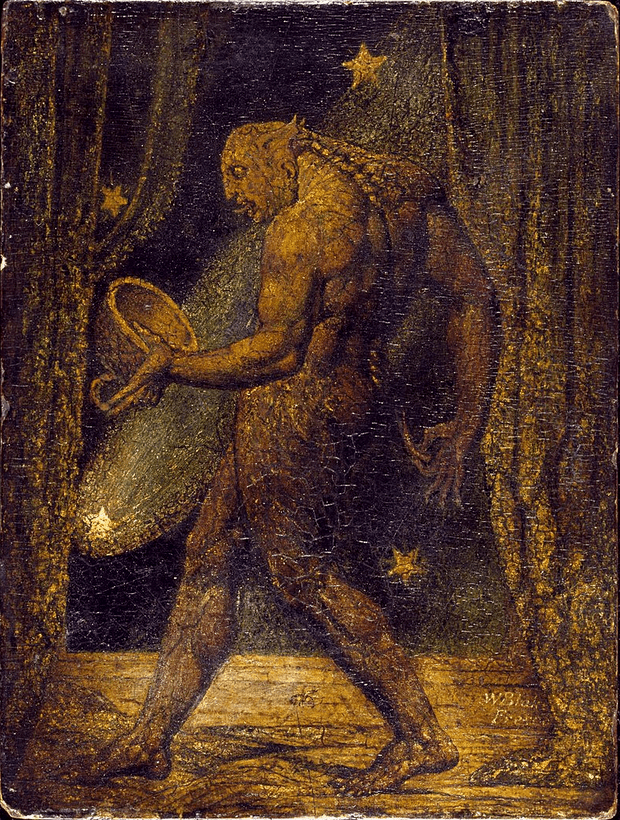
William Blake (1757–1827), a personal favourite, was an English poet, painter, and printmaker. Actually, Blake was not an occultist at all, but he would nonetheless be an important influence, mostly because of his strong views countering rationalism and the many powerful visions that he so masterfully translated into art and poetry. (Rationalism is, of course, the practice or principle of basing opinions and actions on reason rather than on religious belief or emotional response.)
By Blake’s day, rationalists were making an increasingly aggressive argument against such things as “visions,” interpreting them as forms of insanity and delusion rather than having any divine aspect and certainly no practical use. This “rational” view has since morphed into the modern atheistic contempt, even hatred, for all things religious, magical, or occult.
In turn, this encouraged fundamentalist backlashes such as the evangelism that started to go radically political in the 1920s and, more recently in the 1980s (Jerry Falwell Sr. and the Moral Majority), and then 2016 (Jerry Falwell Jr. and Liberty University), which shows that hatred can work both ways.
Remember, it was the political and state authoritarianism of the Catholic Church that had suppressed philosophy and science in previous centuries, then its the authoritarianism of the atheists and materialist stamping on religion in our time. Now that the “rational” materialists control the state rather than the earlier ecclesiastical forces, they, in turn, work just as hard at crushing everything that isn’t “rational.” So it goes, seesawing back and forth between these two forms of actual insanity, until everything beautiful, everything honourable, everything wise, and everything true have been smashed to bits.
It was precisely this logical, coldly pseudo-analytical interpretation of reality that Blake was rejecting, as indicated in his poem, Jerusalem. He could see clearly where this one-sided view could lead: to the murderous twins, scientism and materialism, growing into the giants that would eventually jack-boot across the world in the 20th century and are still clumsily destroying all the good in the world to this day (though most jack boots have been replaced by Birkenstock sandals).
Imagining alternatives to rationalism brings us to the next important part of the occult story: an art movement that will completely change the course of Western culture: Romanticism.
 Arthur Ronald Conway Hubbard